It’s been five years since my trip to Osaka. Interesting to look back, to see what memories jump out. Among the heavy-hitters are walking my legs off, convinced I could find my hotel without public transport, and marveling at the puzzle-perfection of the region’s temples. Incredibly, I didn’t come close to Osaka Castle. I could see it in the distance near my lodgings in Higashi-Umeda but put it off. There were other attractions I wanted to knock out first, like deer-infested Nara and those vermilion gates of Fushimi Inari Shinto Shrine in Kyoto. Both locations are easy day-trips from Osaka and well worth it.
Kyoto in particular is a gorgeous sucker punch. The former thousand-year country capital is a stunning collection of temples, gardens and natural scenery. Kiyomizu-dera is a Buddhist temple complex in the eastern part of that city and a personal favorite. If you like wood, and why wouldn’t you, its main hall is a goliath of Japanese cypress. Huge pillars, no nails, panoramic views. Fushimi Inari however was the magnet with the strongest pull, as I recall. The sight of hundreds of reddish-orange torii gates snaking through the forest of Mount Inari was too…rad, to miss. You can “purchase” your own by the way. Every blessed gate bears the name of the person or company who made the requisite donation. The shrine was busy during my visit. Given that so many of the structures and customs there relate to purification and wanting prosperity, I wonder if it ever sees a lonely day. Inari is the Shinto god of rice and the many fox statues spread about are messengers meant to petition the deity, entreat him for one’s good fortune. Dozens lined up to buy a fox its preferred offering, rice snacks and fried tofu.
Nara is another winner and yet another former Japanese capital, the nation’s first. The city isn’t as celebrated in travel circles as Kyoto but on par in my humble you-know-what. I’ll drop but two names, Kasuga Taisha and Todaiji. The former is a Shinto shrine bathed in bright orange and decorated with stone and bronze lanterns. The latter is described on Japan-guide.com as “Large temple with a big Buddha statue.” Really can’t argue. Something I’ve noticed throughout my years in east Asia is that on the subjects of Buddhism and shopping, there are ample biggests and oldests. Aside from the 15-meter bronze Buddha (Daibutsu) housed in the main hall (Daibutsuden), there is a pillar containing a hole that matches the size of that Buddha’s nostril. Pass through and receive the gift of enlightenment in the afterlife. Seems fair. As mentioned, the city plays host to one or two deer. Cute as heck and wild but not so shy, and deer crackers (shika senbei) for sale on approach to Todaiji, in Nara Park, guarantee a close encounter of the fur kind. It’s a nice, mini bucket-list moment until you start hugging.
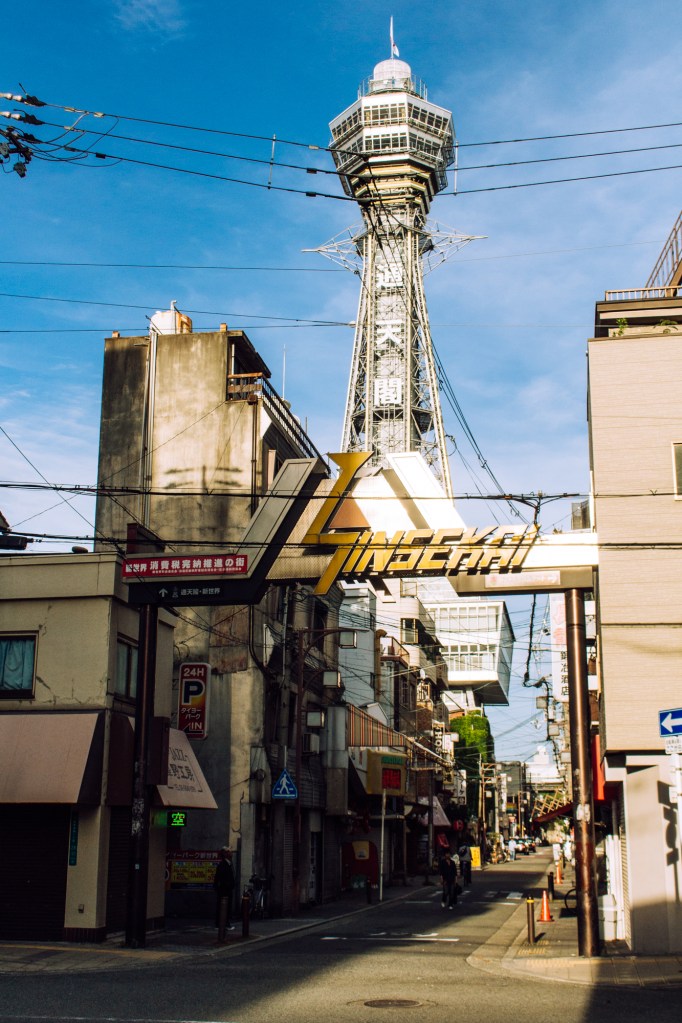
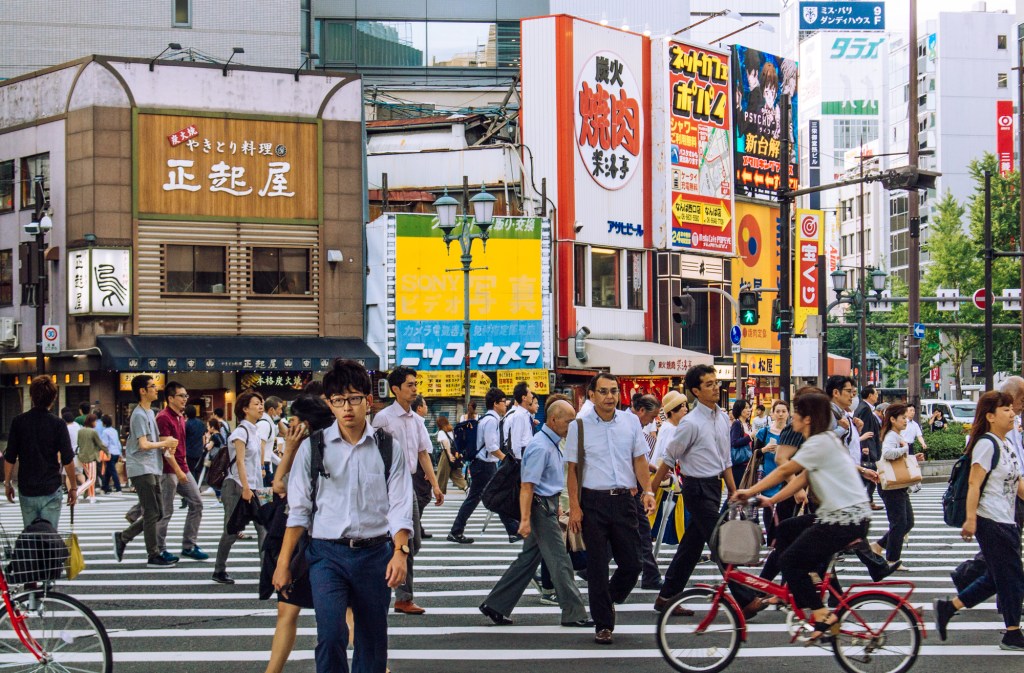
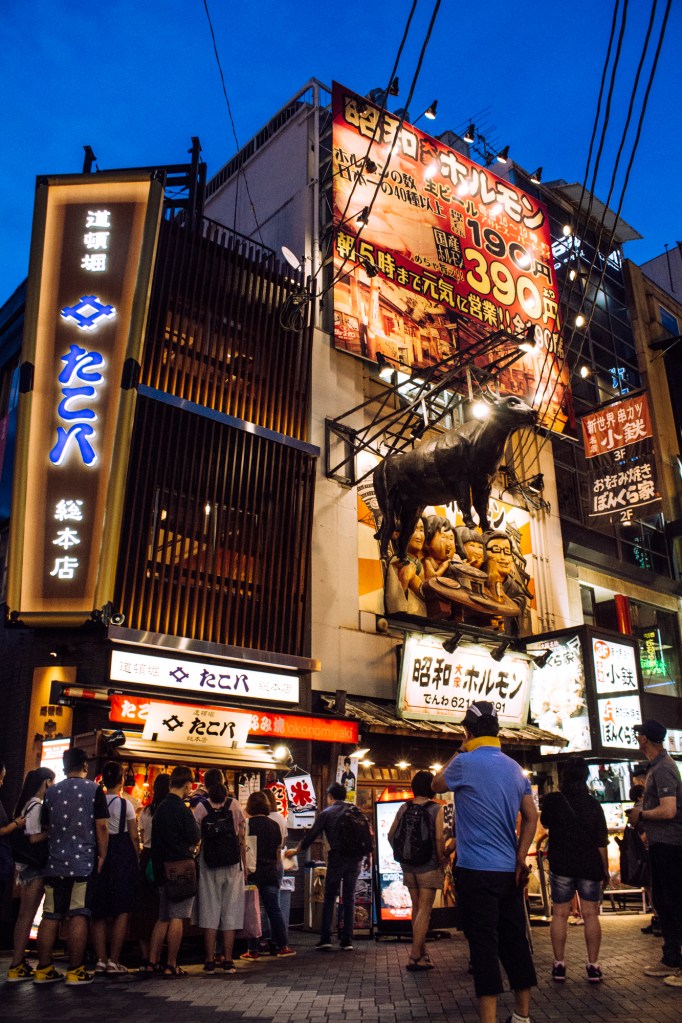
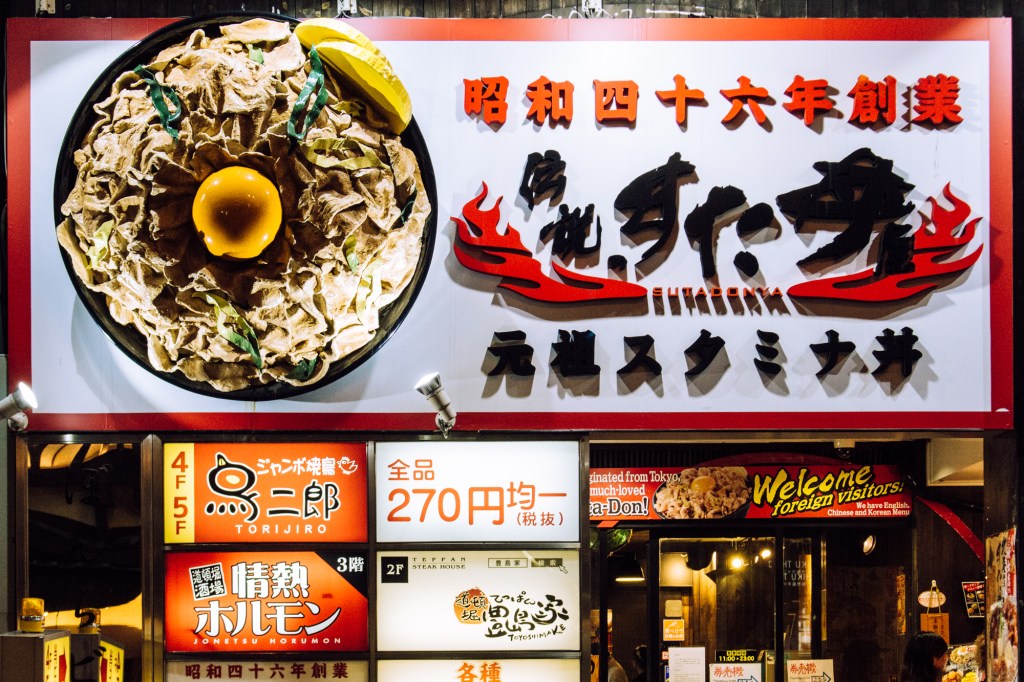
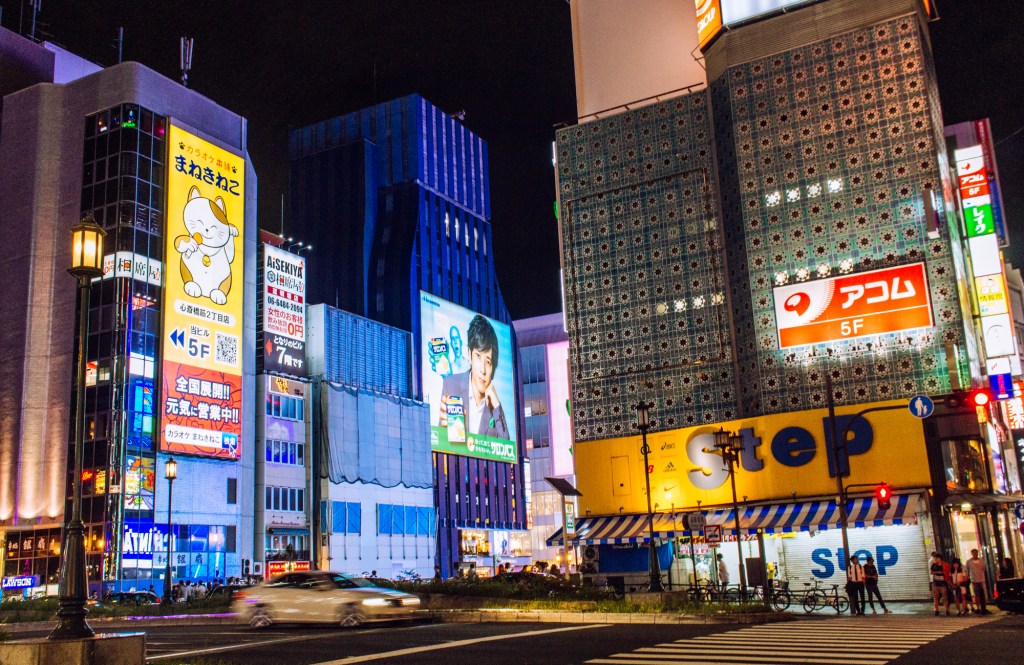
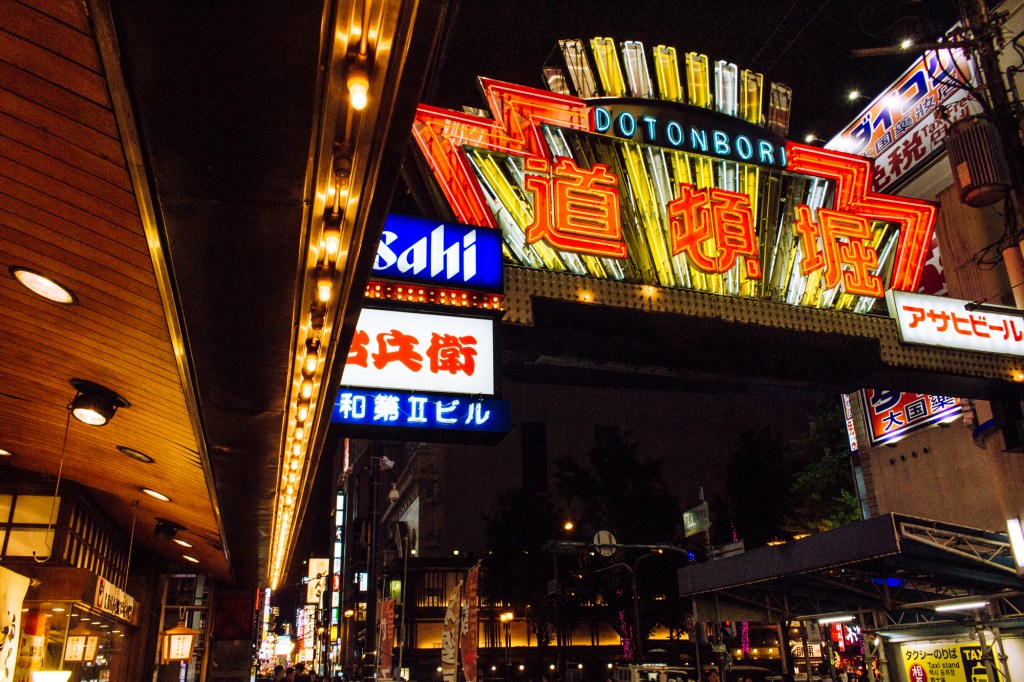
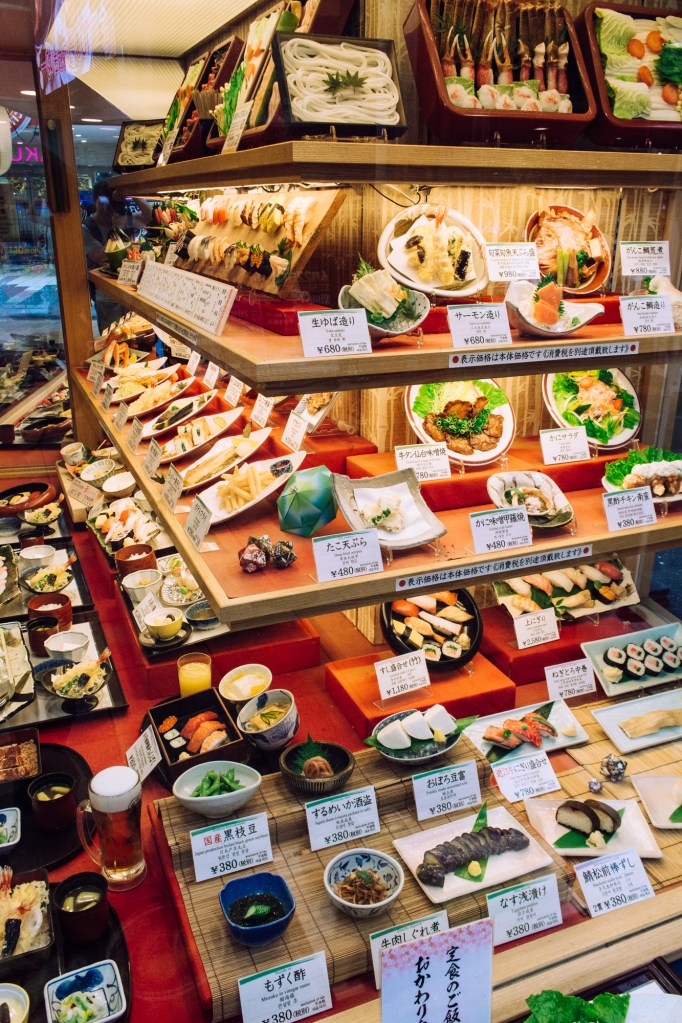
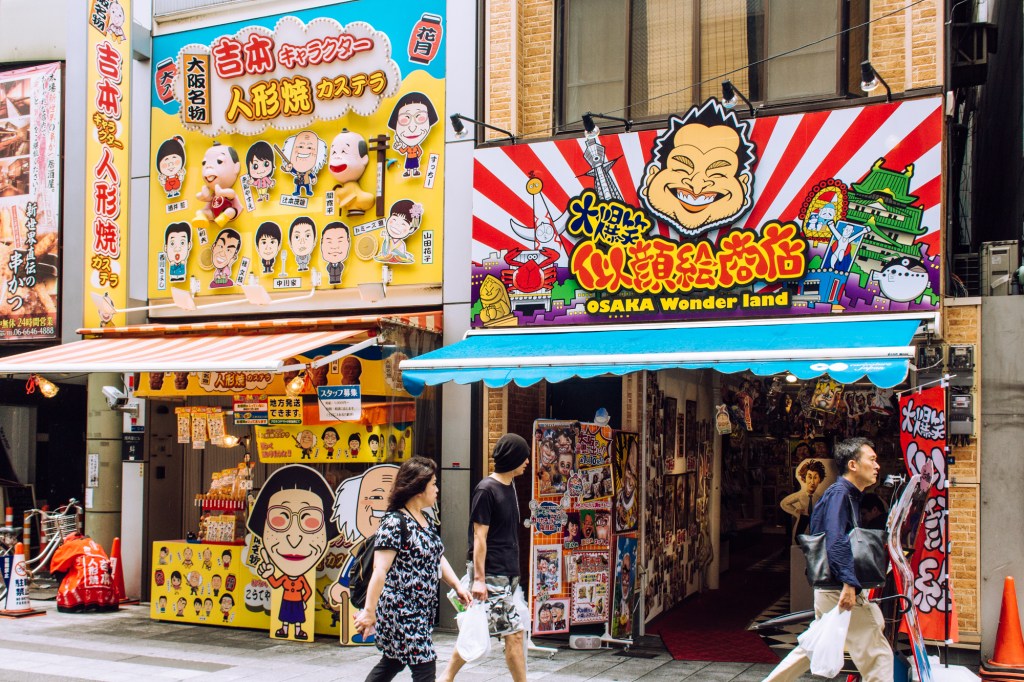
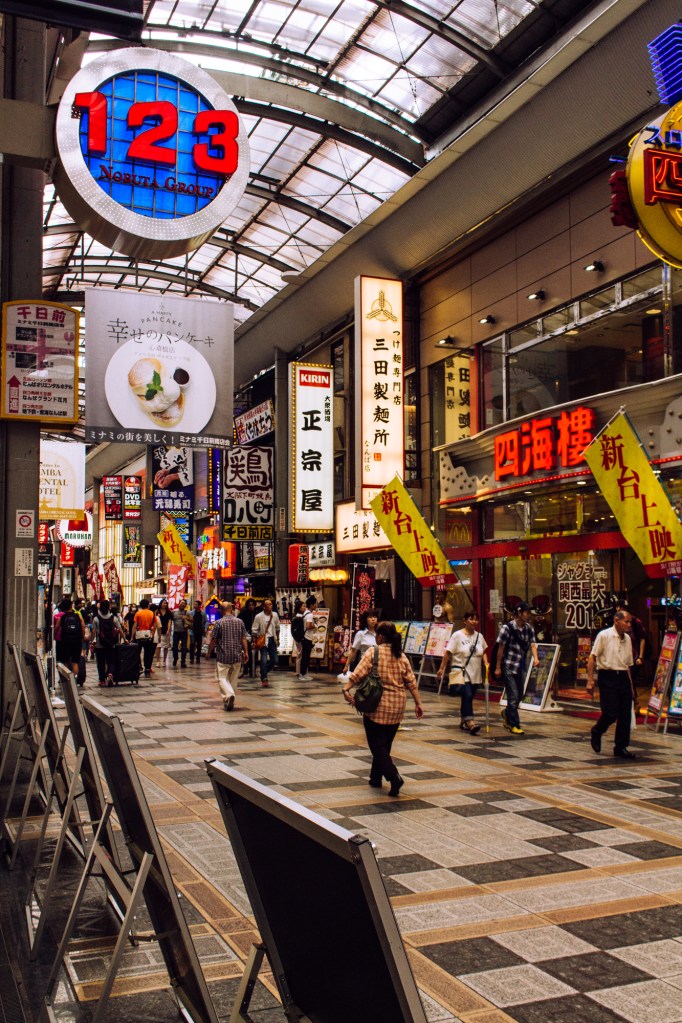
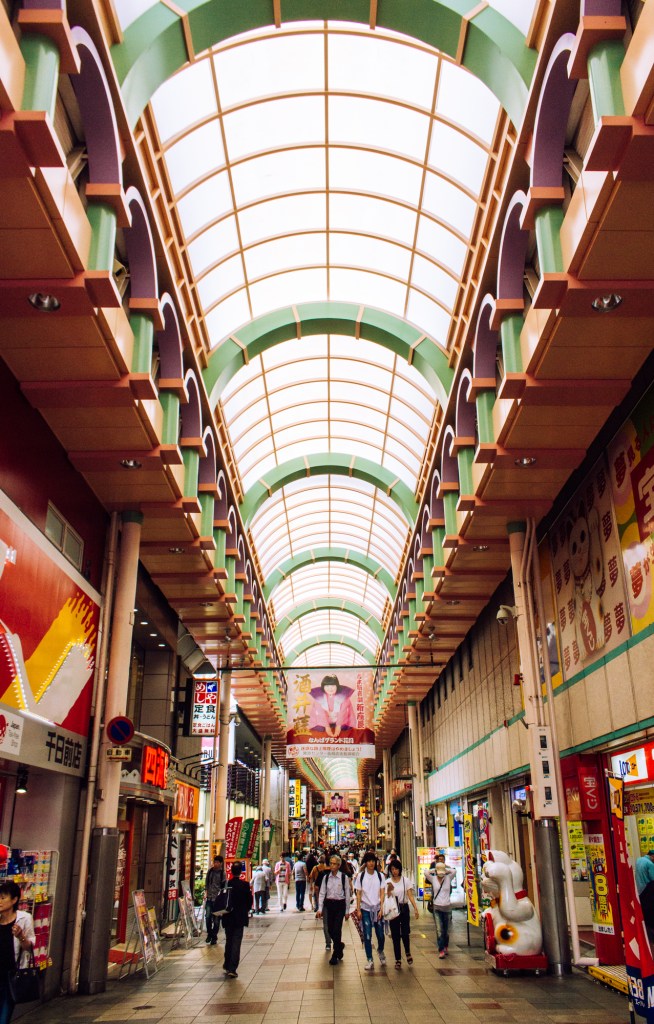
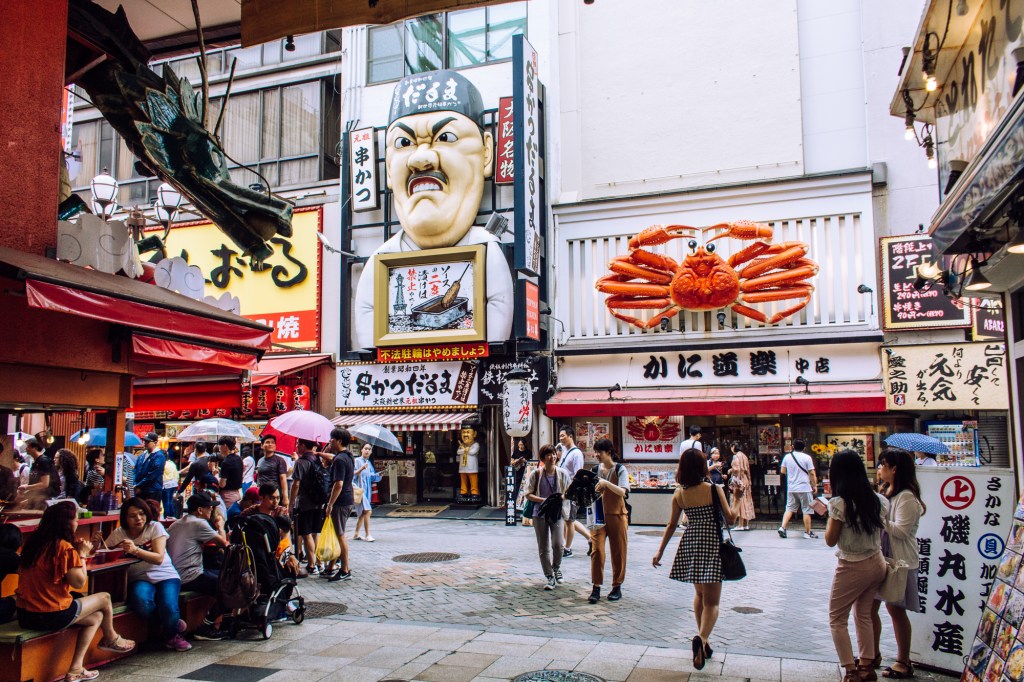
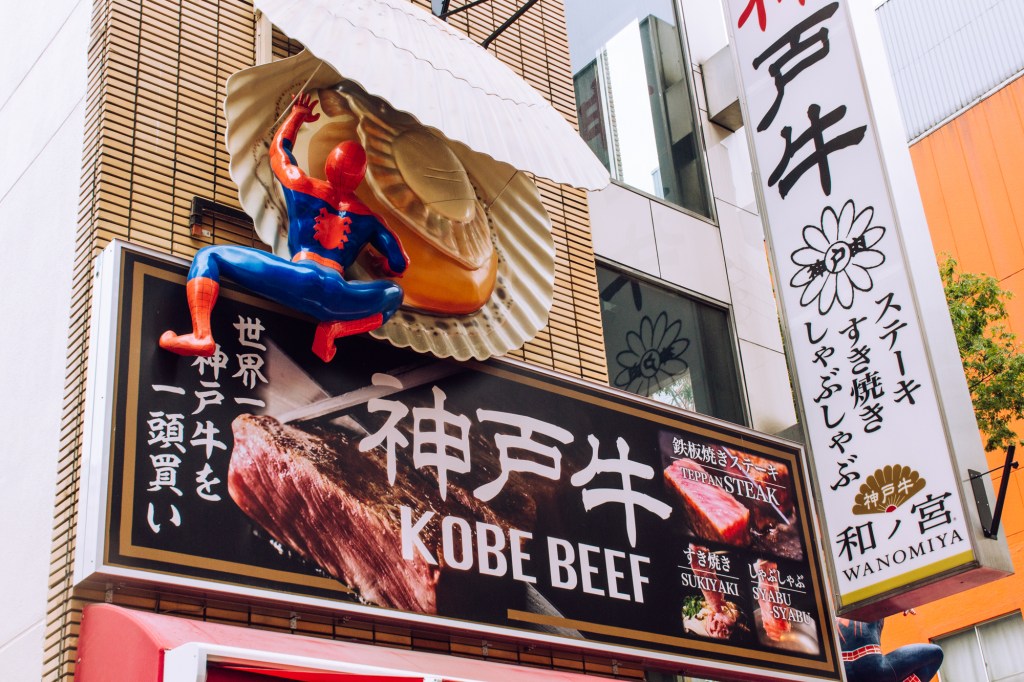
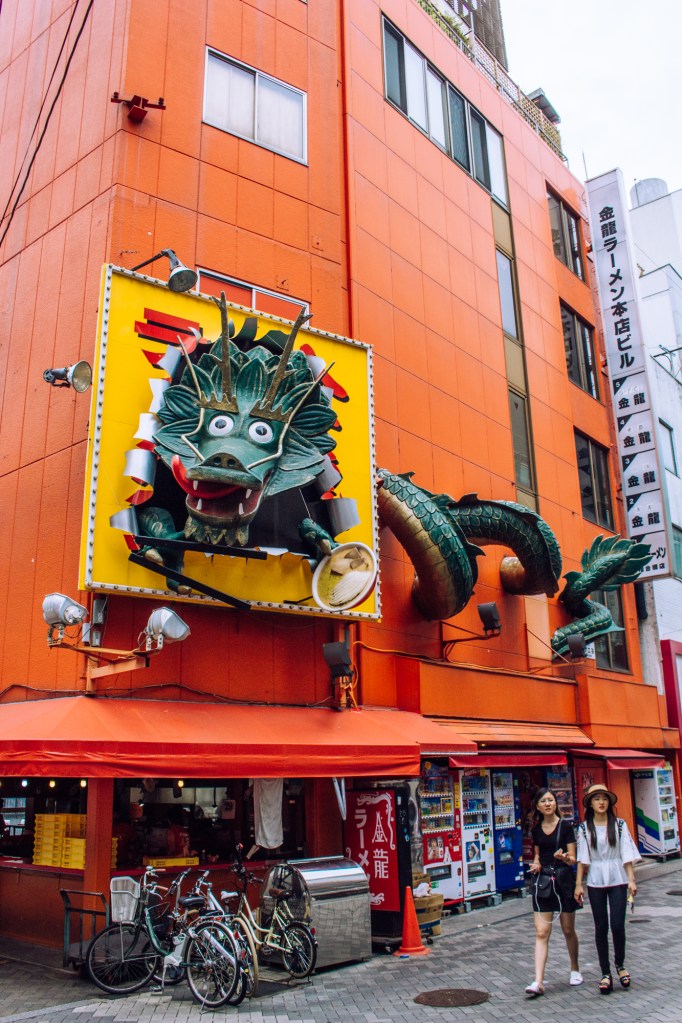
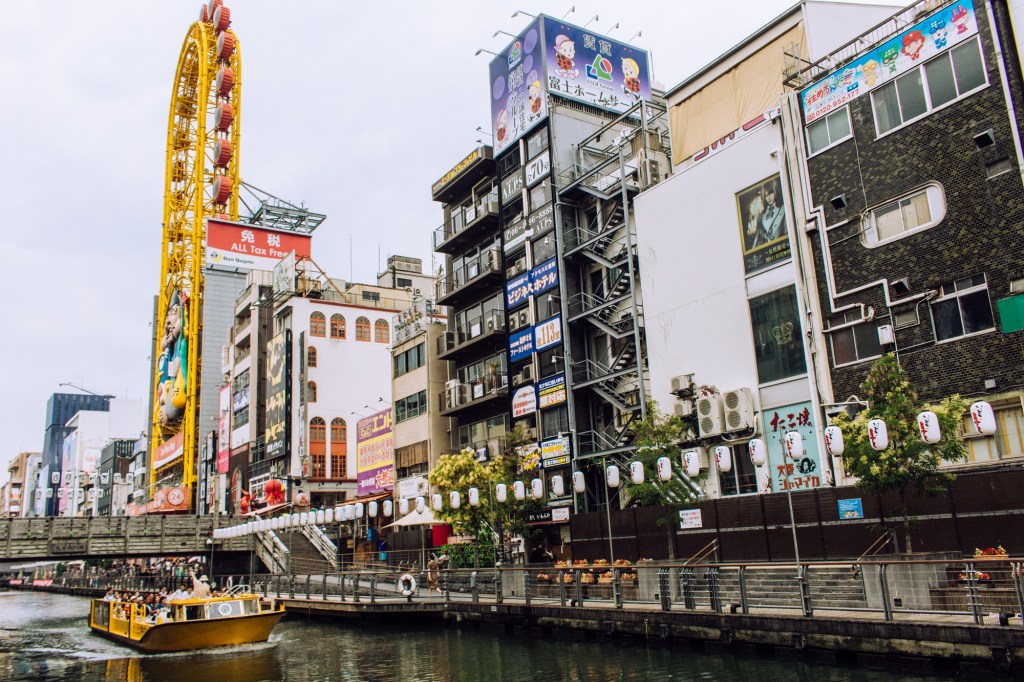
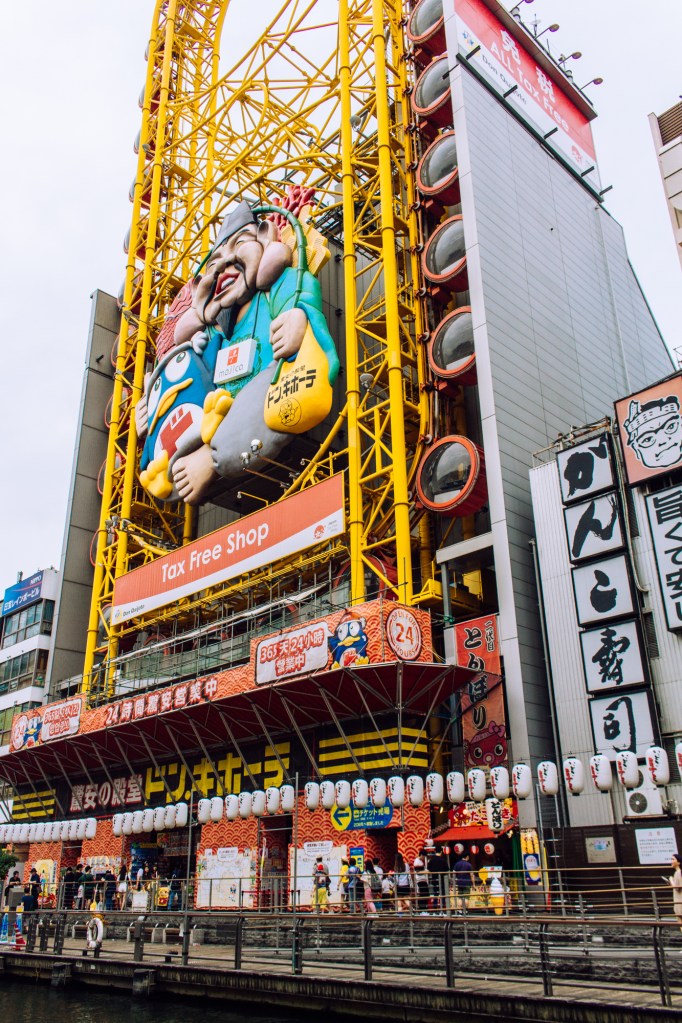
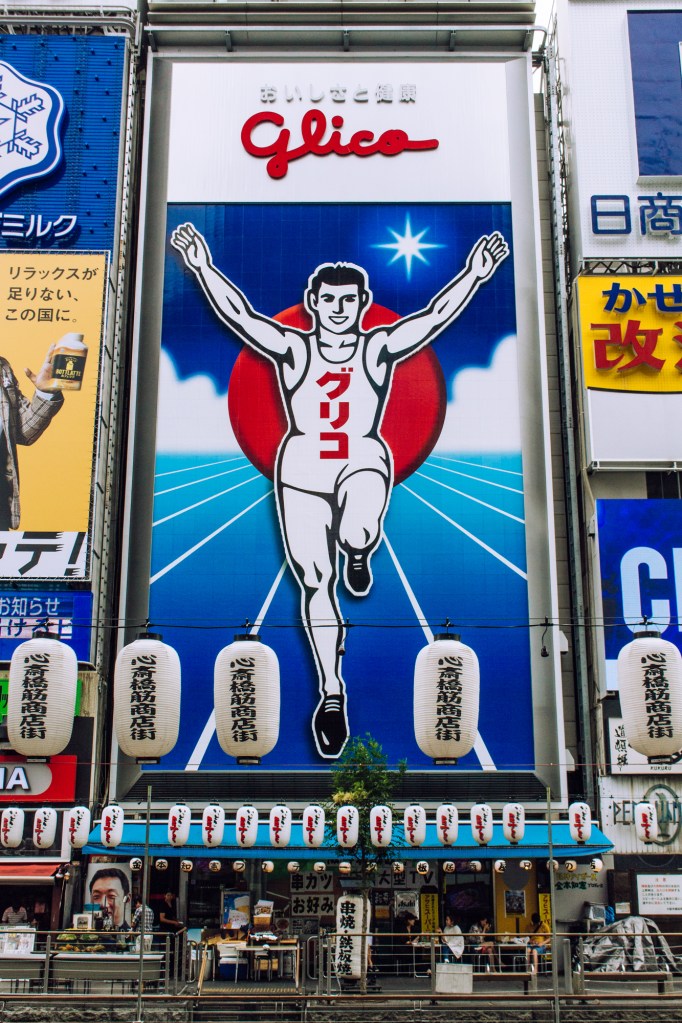
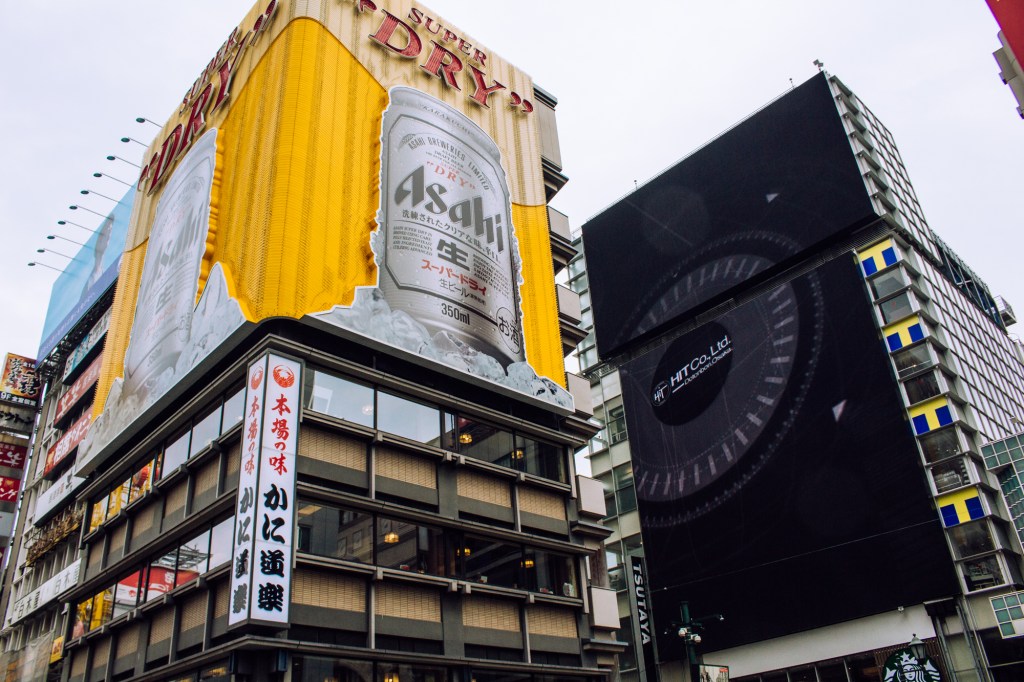
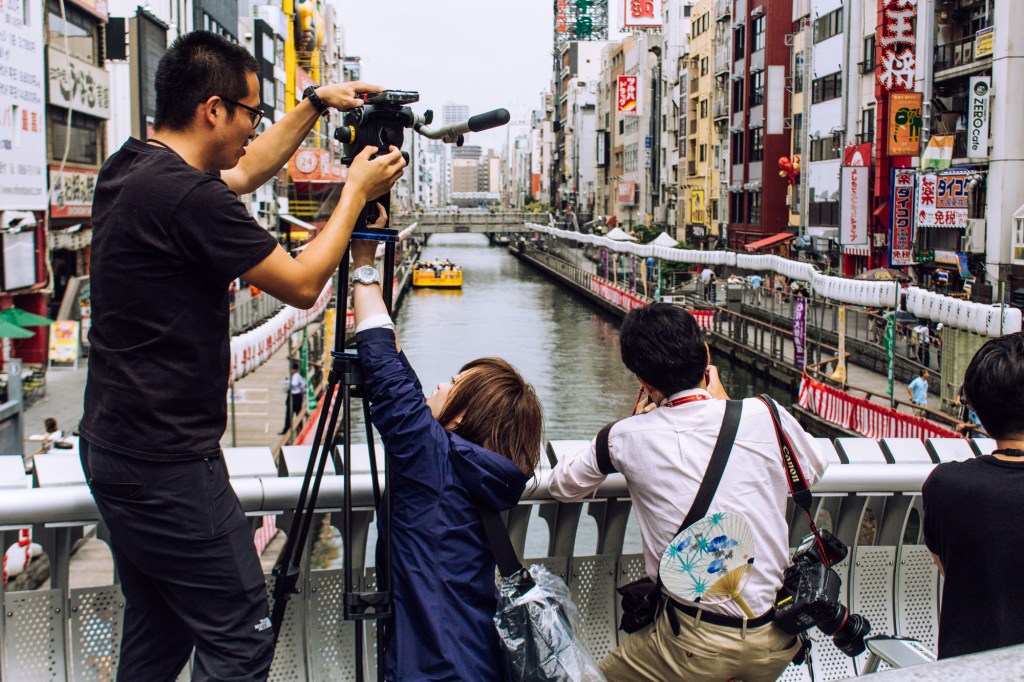
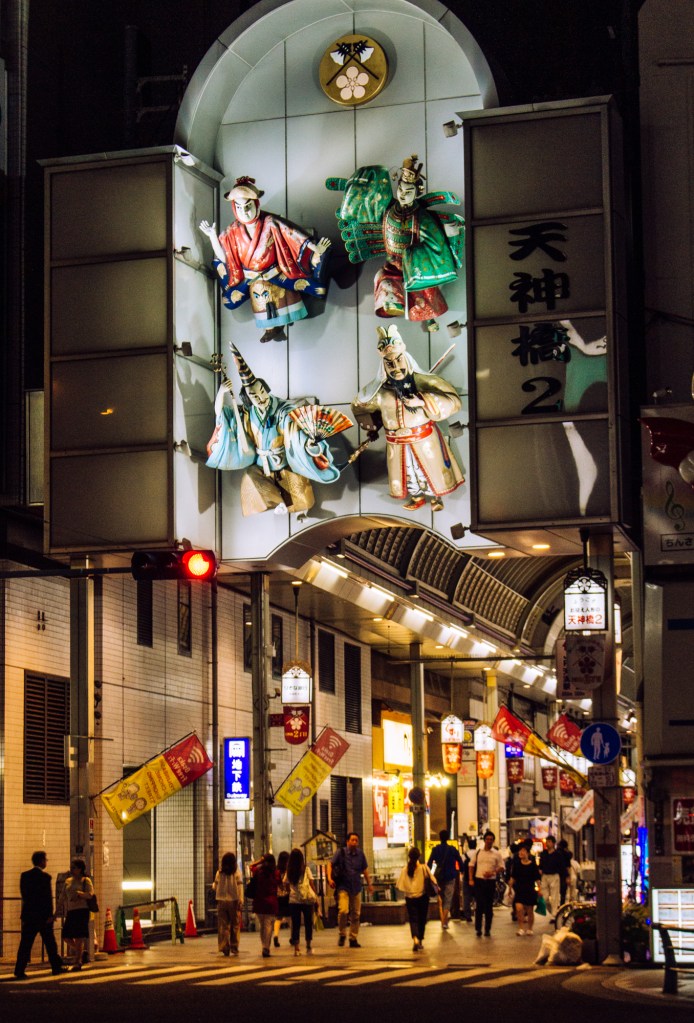
The day-trips were just the thing I needed to clear my head of teaching, of life’s white noise. I do like me a good sprawl though and Osaka provided. My mind snaps back to the covered shopping arcades of Shinsaibashi-suji and the ear-wrecking pachinko parlors, Ebisu Tower and the Kani Dōraku crab. I saw the Glico Man of course, running along the Dōtonbori Canal like the champion landmark he is, and sat for a cold beer at an outdoor patio directly beneath him. Somehow this icon of athleticism is the symbol of a candy company. On the subject, I’m not a foodie but I like it, both for the bevy of tastes and its life-sustaining properties. One meal I recall put me face to face with a sushi chef, aged and obviously skilled, across the bar of a narrow restaurant. I distinctly remember inhaling the first piece, it was food after all, before taking note of the utter deference the woman to my left was paying towards her own morsel. An ode to ingestion. I acted in kind, forcing myself to chew like a connoisseur, purposefully, in part to savor the fish but also not to look like a thug. It worked as far as I could tell, the savoring. Damn good sushi. Damn good trip.
 Colin Moore