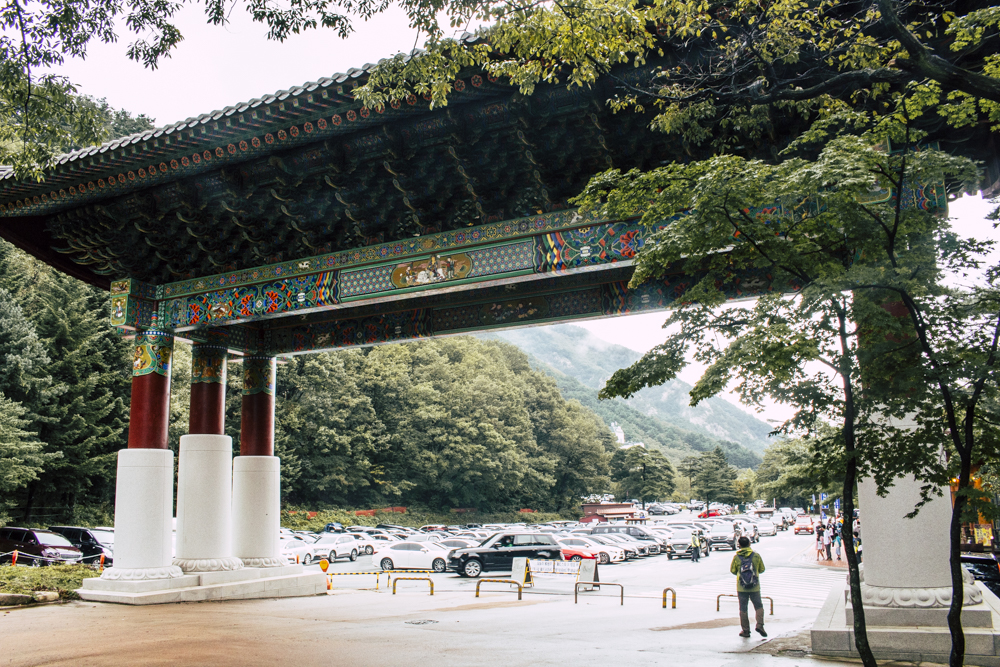
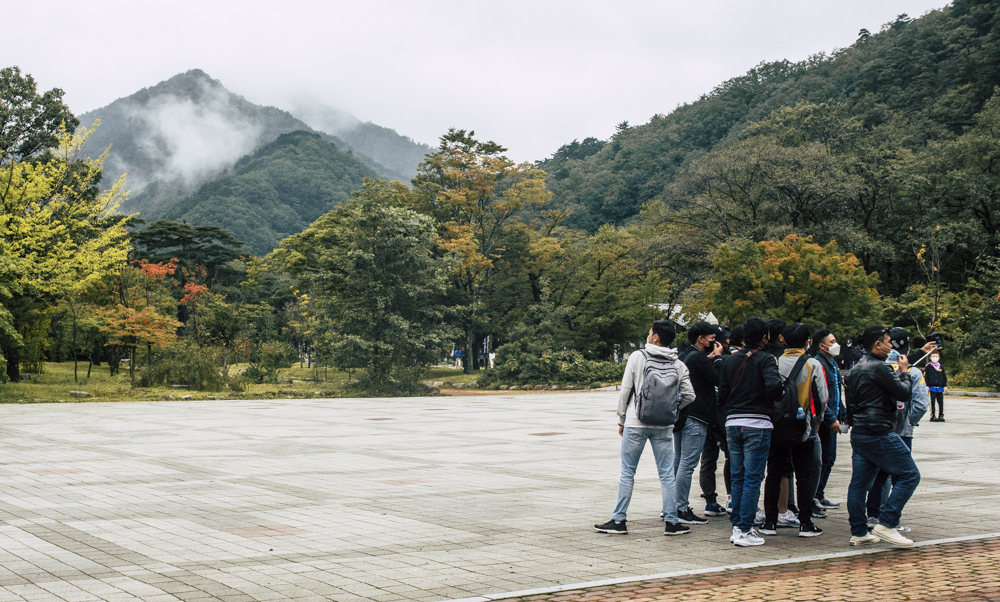
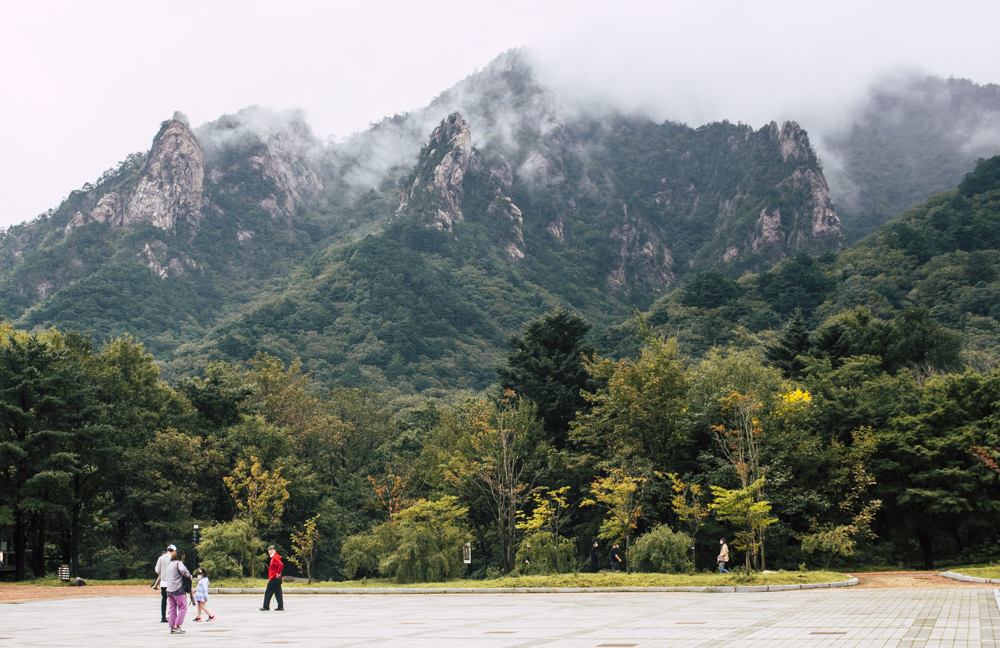
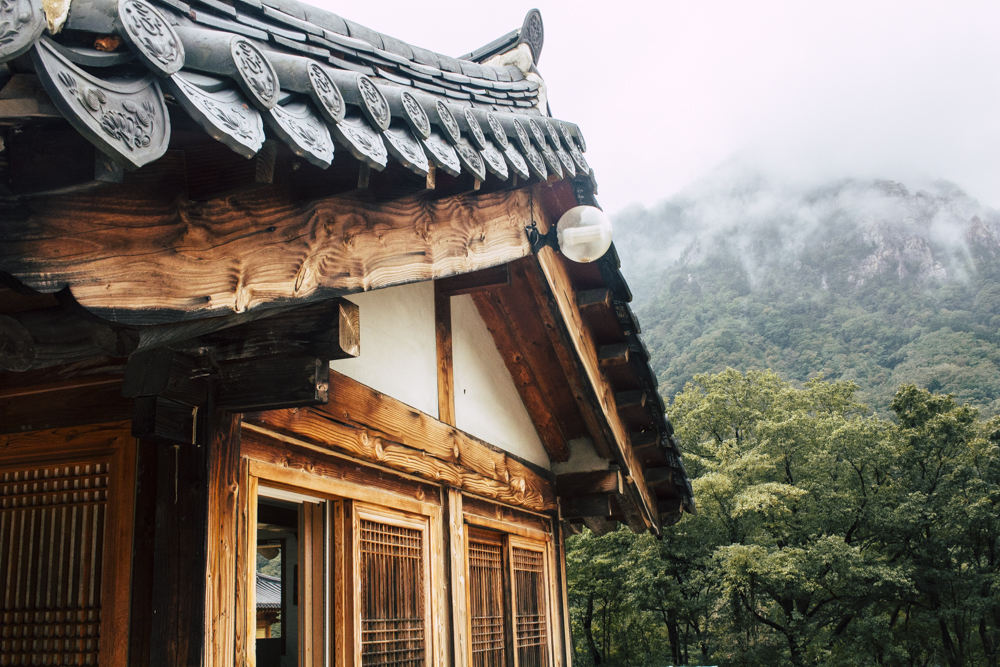
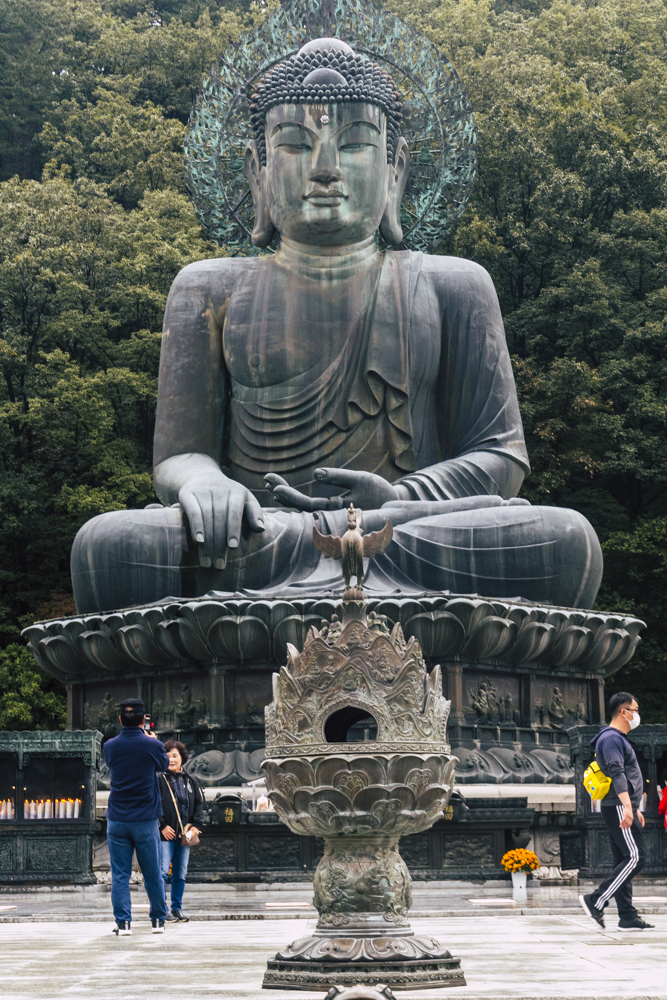
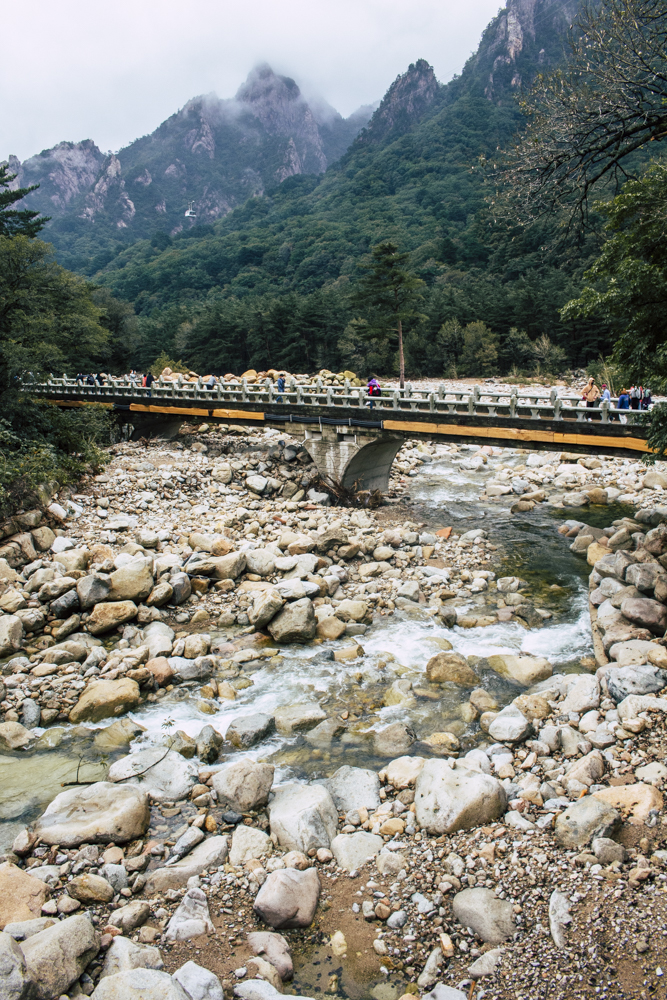
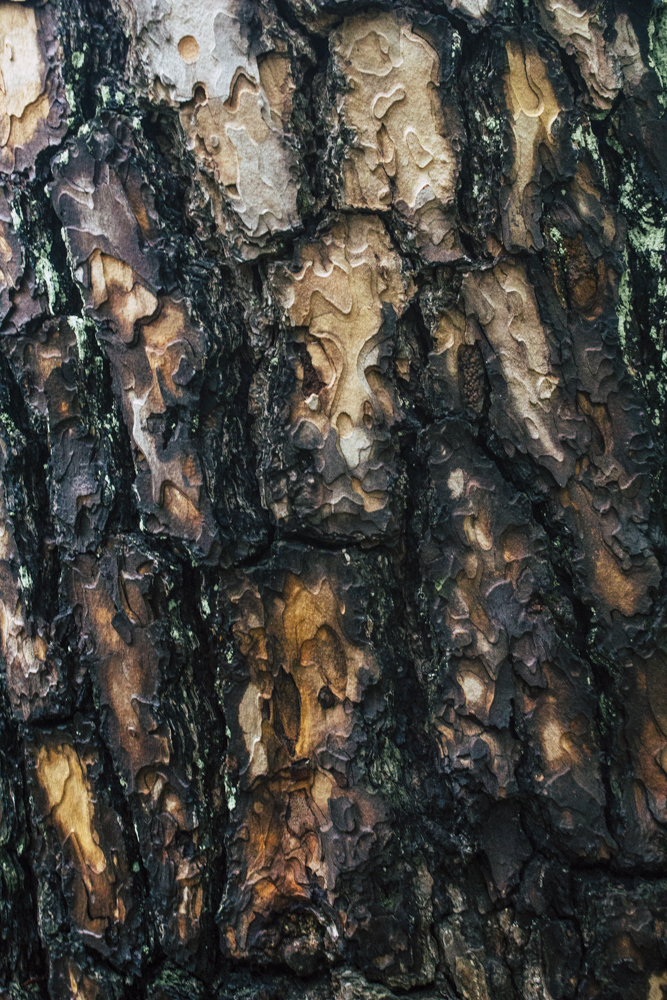
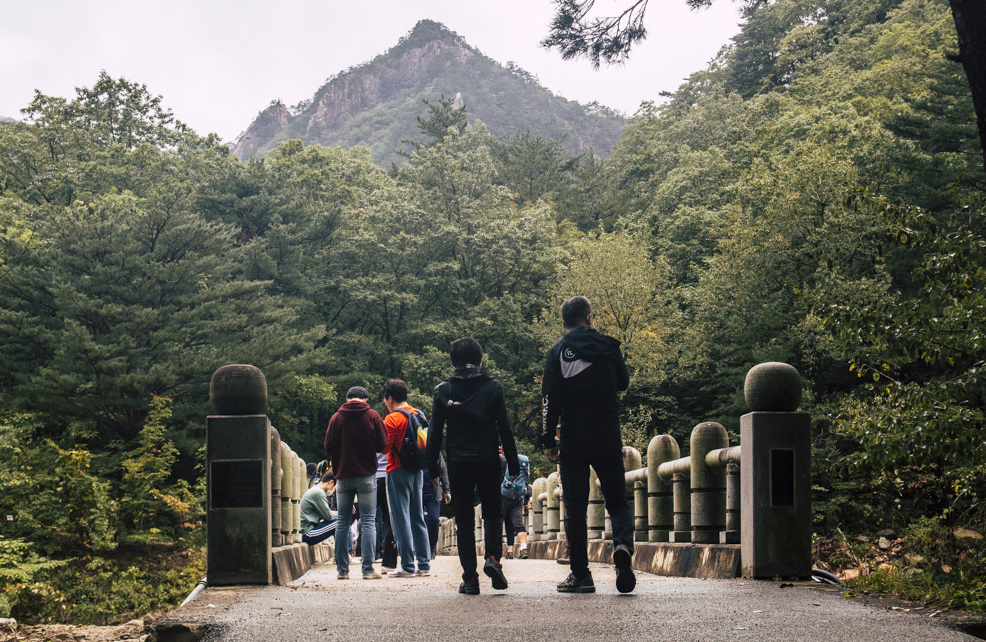
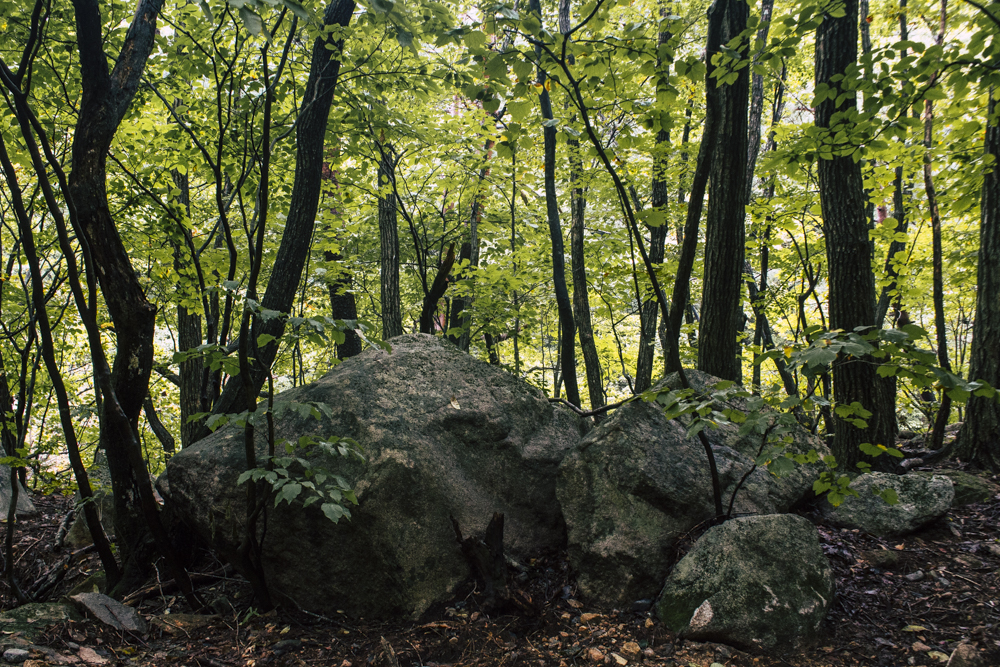
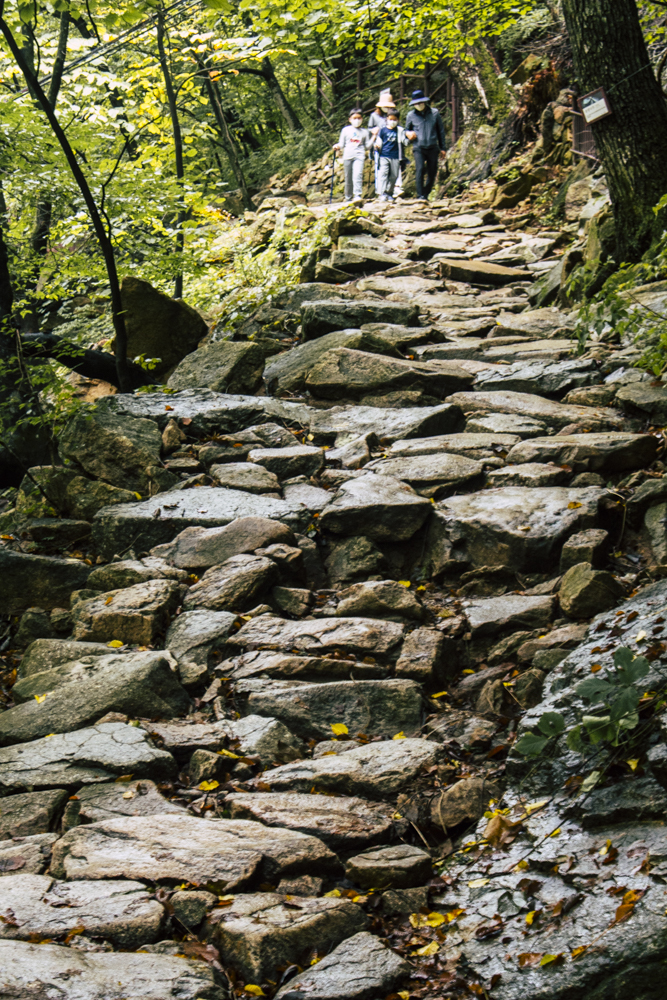
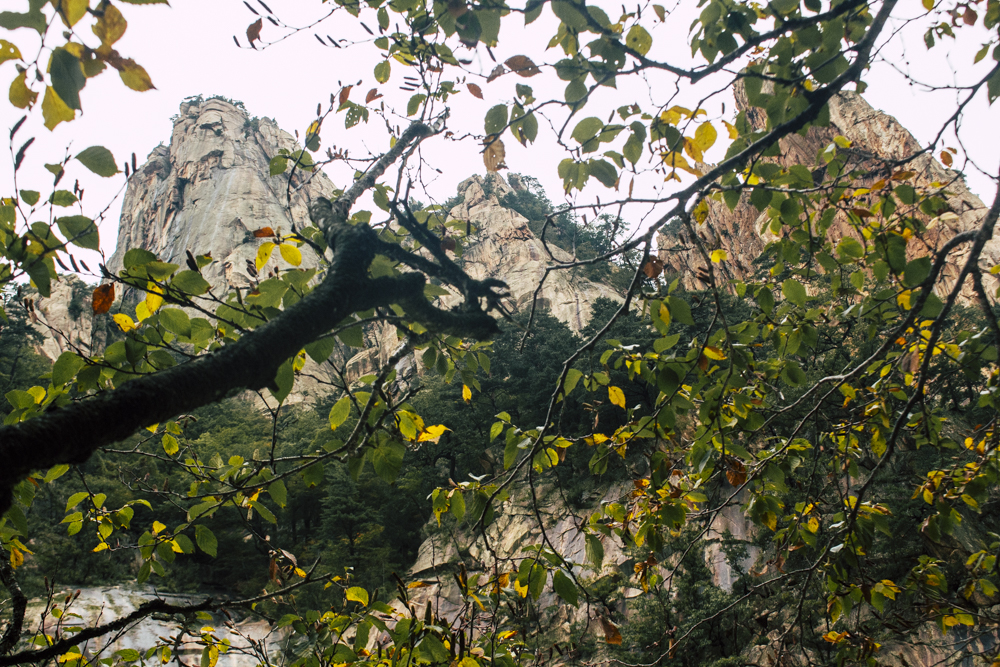
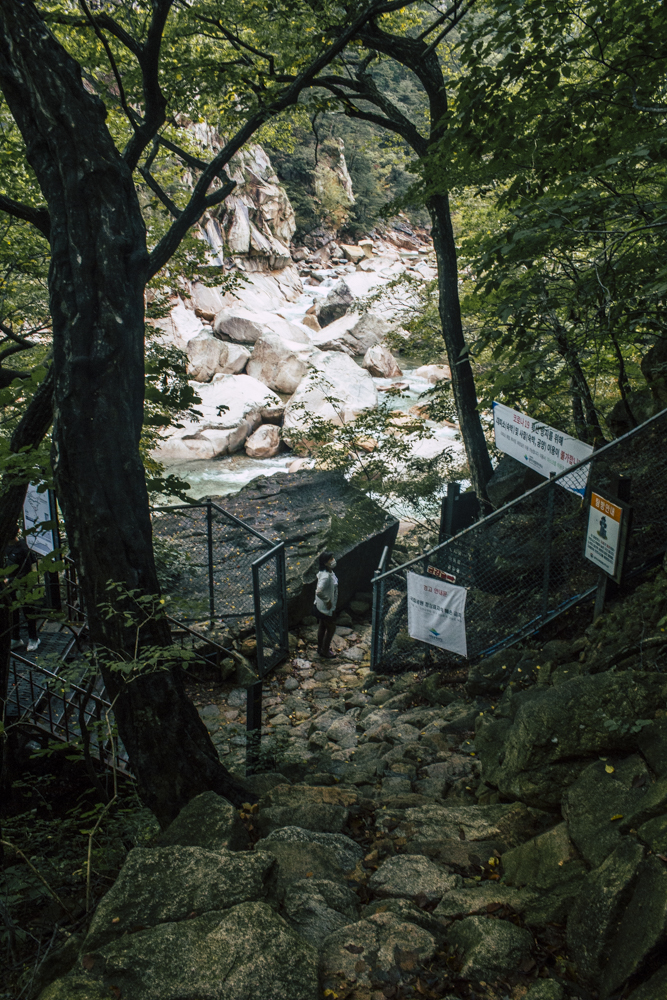
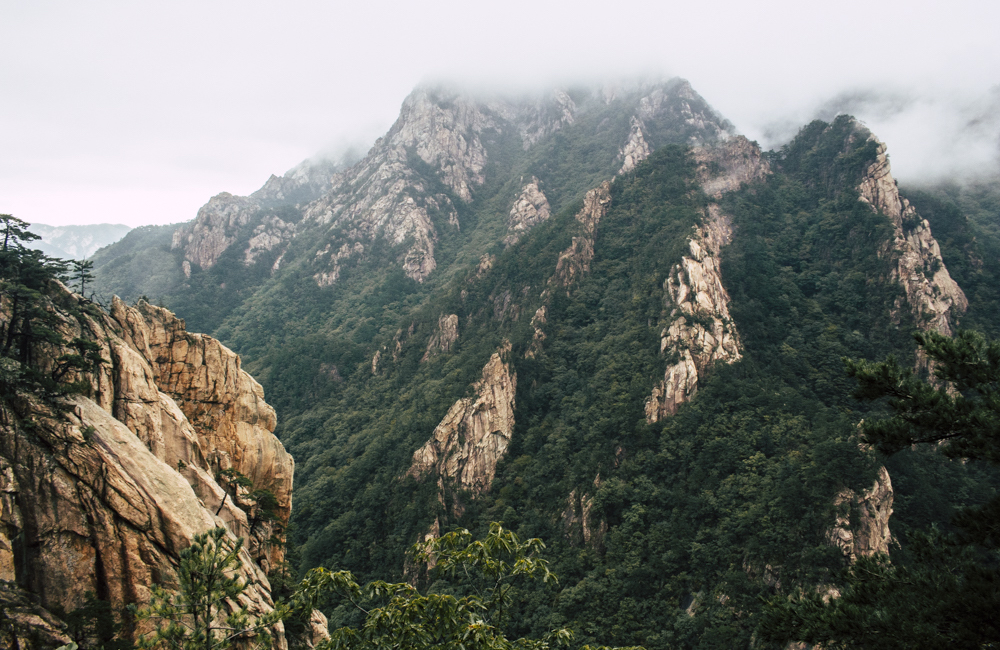
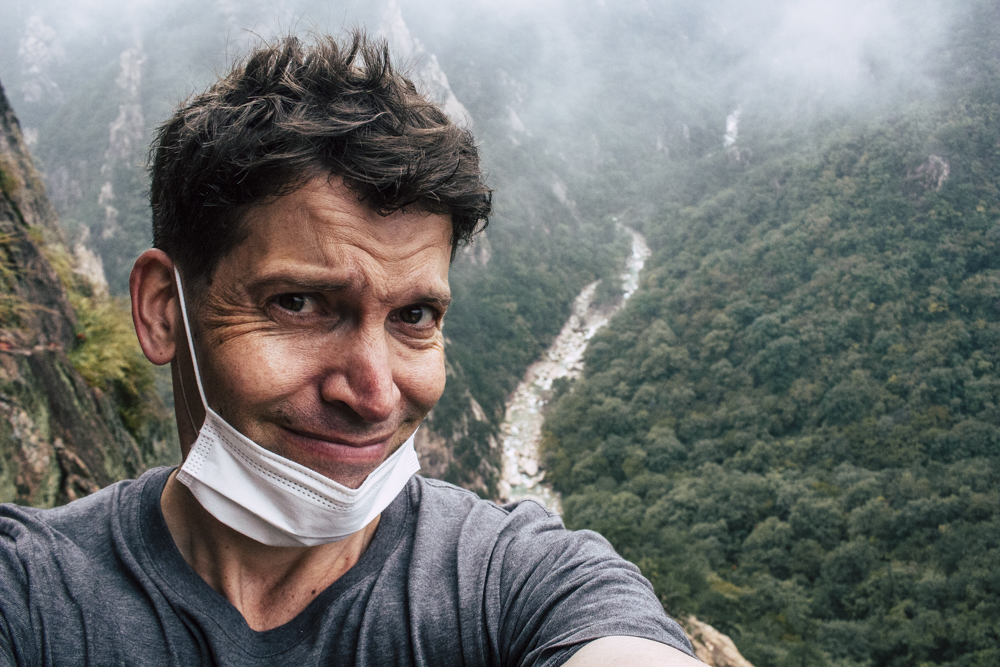
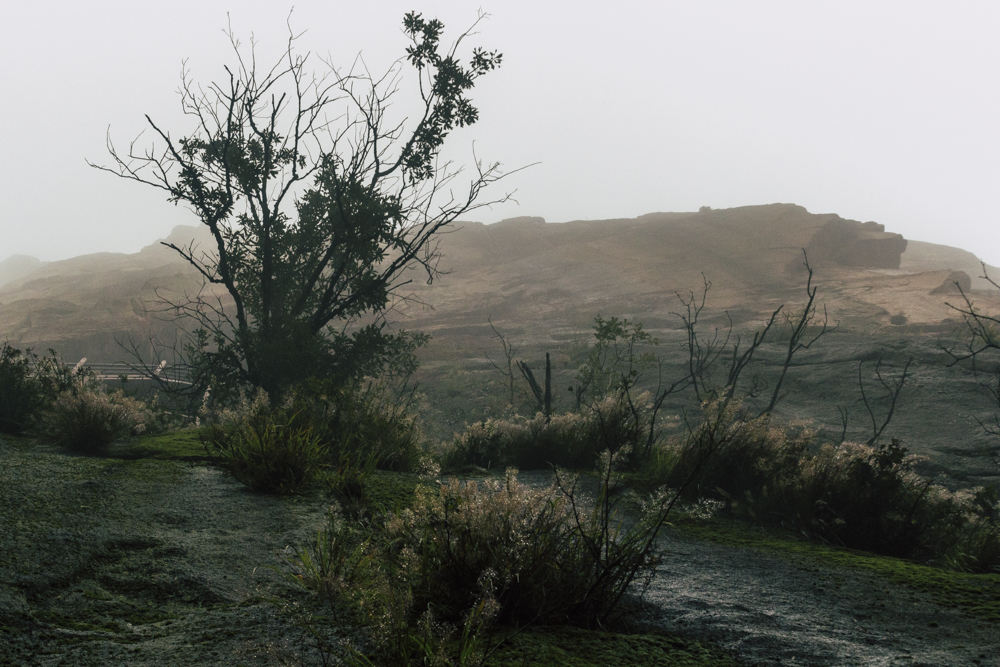
I’ve seen two moods of Seoraksan, grey and sun-drenched. The first of my three-day visit to this northeastern national park had coolish hiking air and mist in the peaks while the second and final were blue-skied and bright. It’s hard not to be awed, from well before the front gate where your car or bus will inch along in a single lane of traffic. Easy enough to disembark public transport and hoof the 20 or 30 minutes to the entrance. A mask rule was in effect to no one’s surprise, but past an outdoor lobby of cafes, restaurants and the bronze Unification Buddha and into the forest trails, where bodies spread out, that loosened. The 2000-plus occupants of these forest canopies were difficult to see. I spotted a lone chipmunk and several steely blue beetles. Flora is an entirely different story as the early autumn greens, yellows and browns were everywhere. There are information plaques spaced along the trails and I pretended to educate myself, about what bark causes inflammation and what mushrooms can potentially end life.
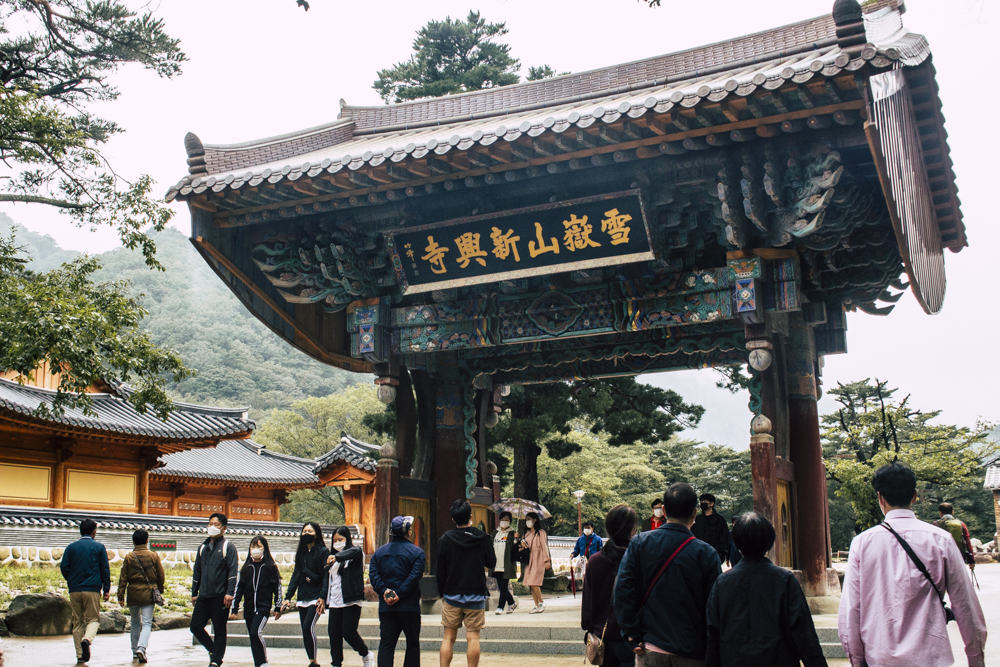
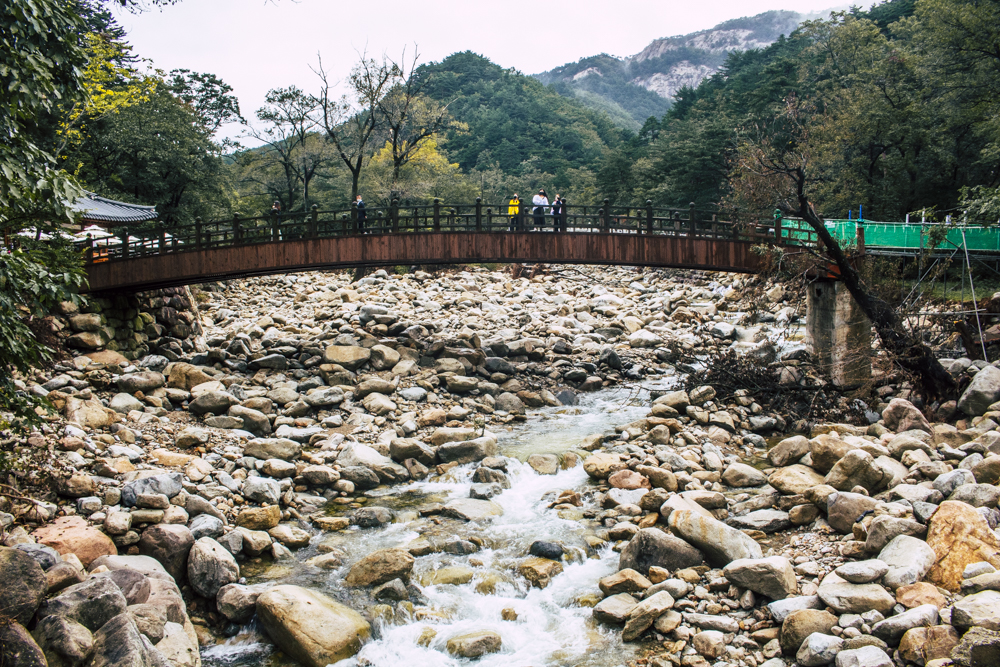
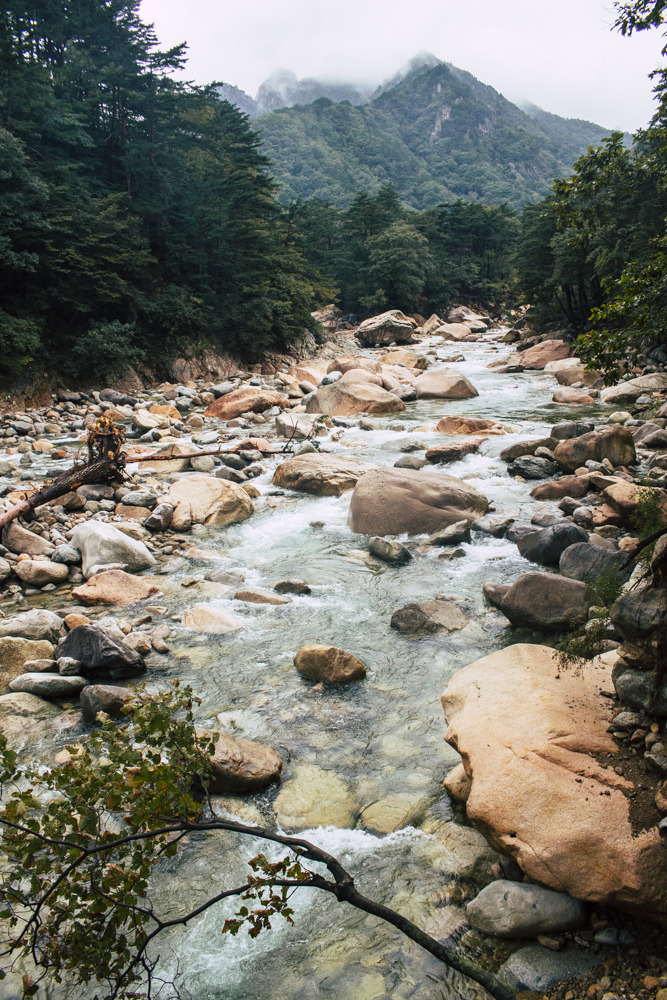
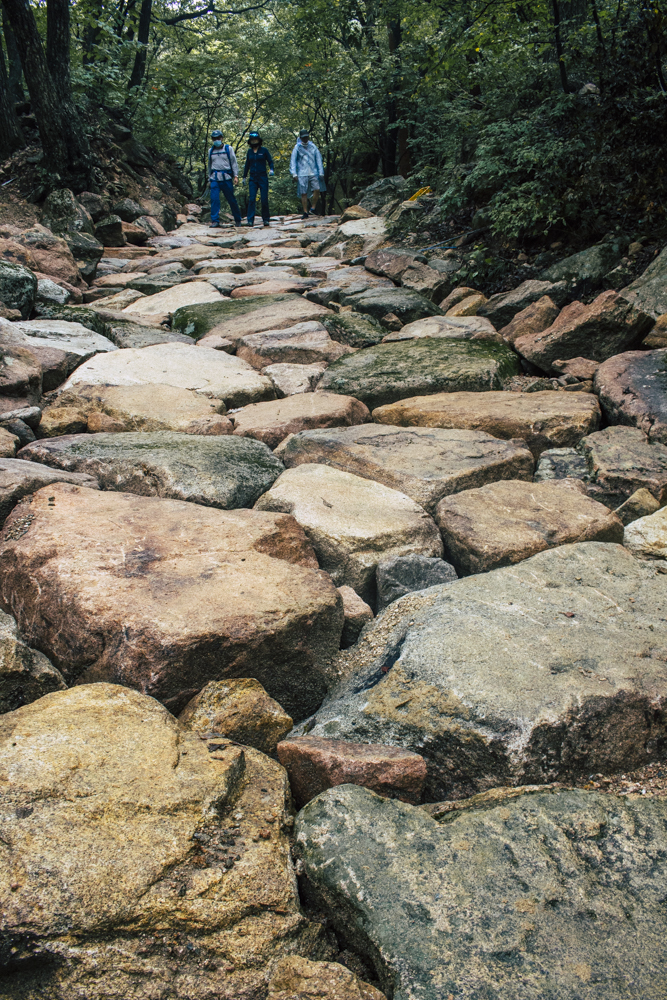
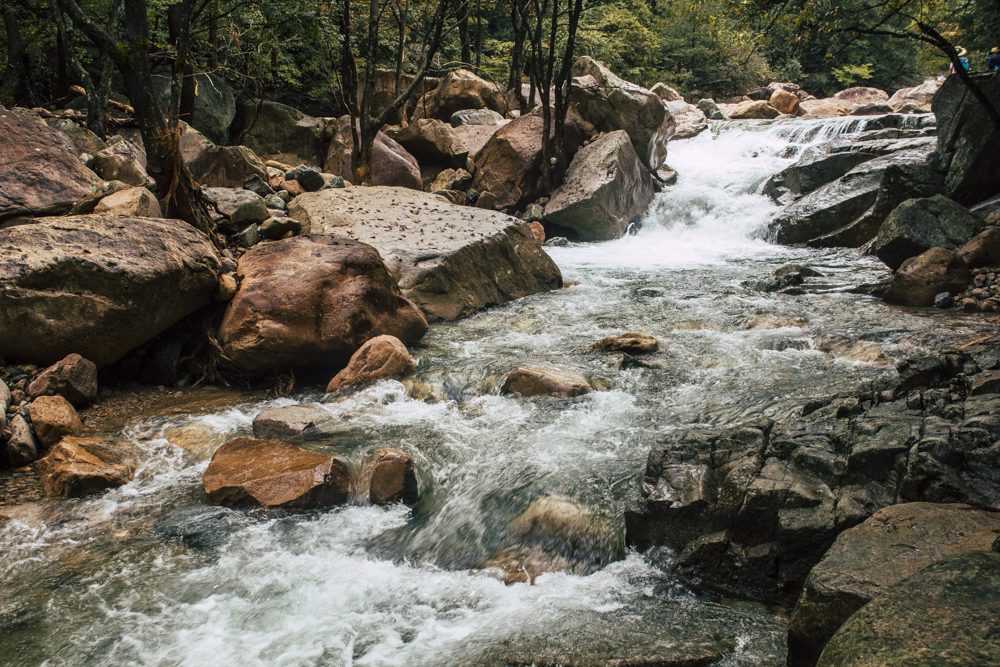
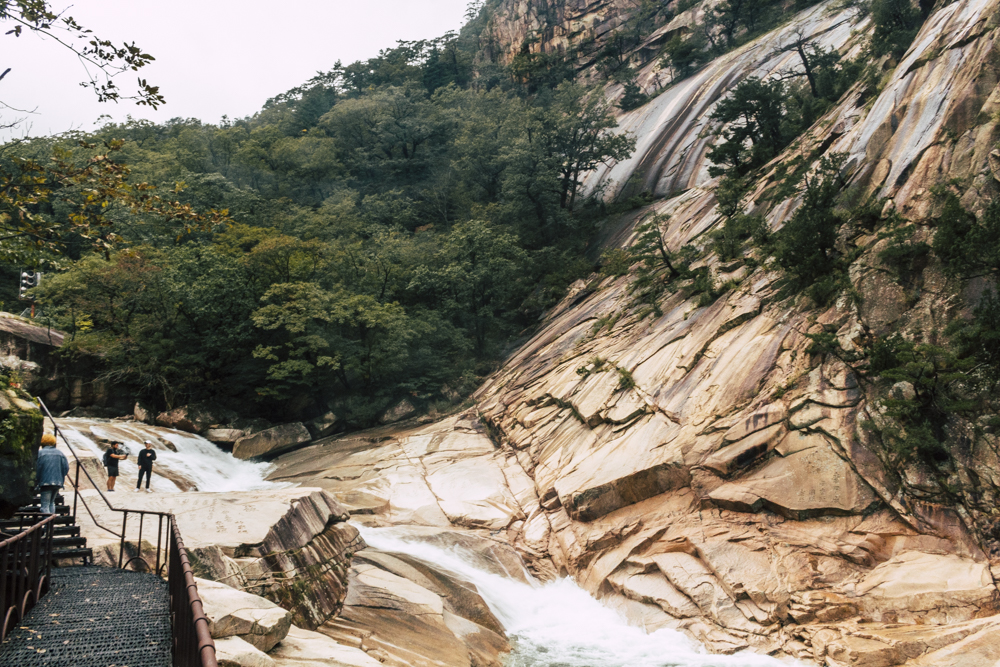
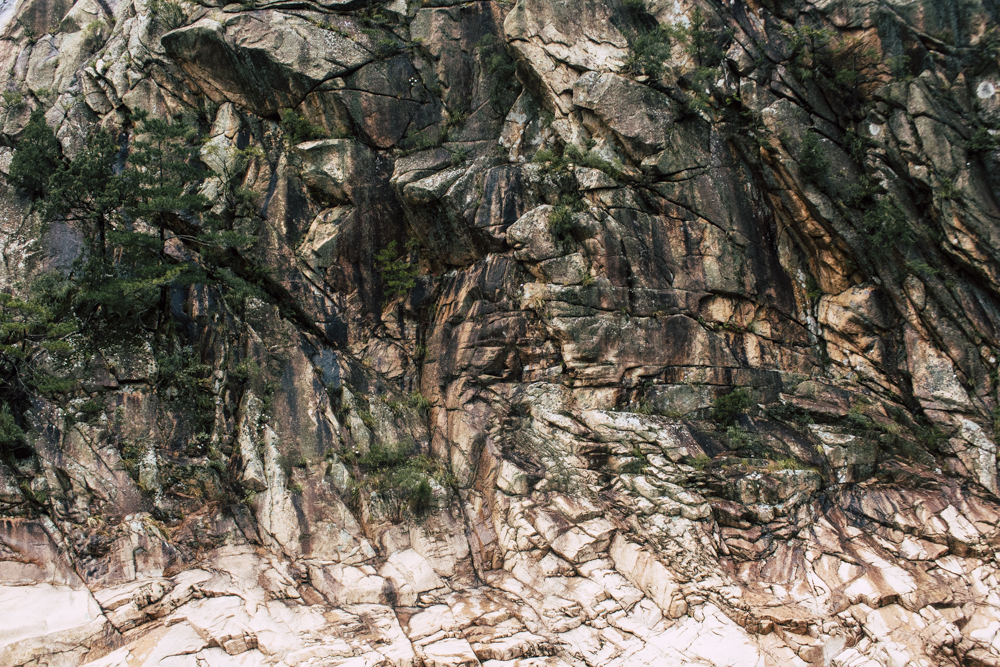
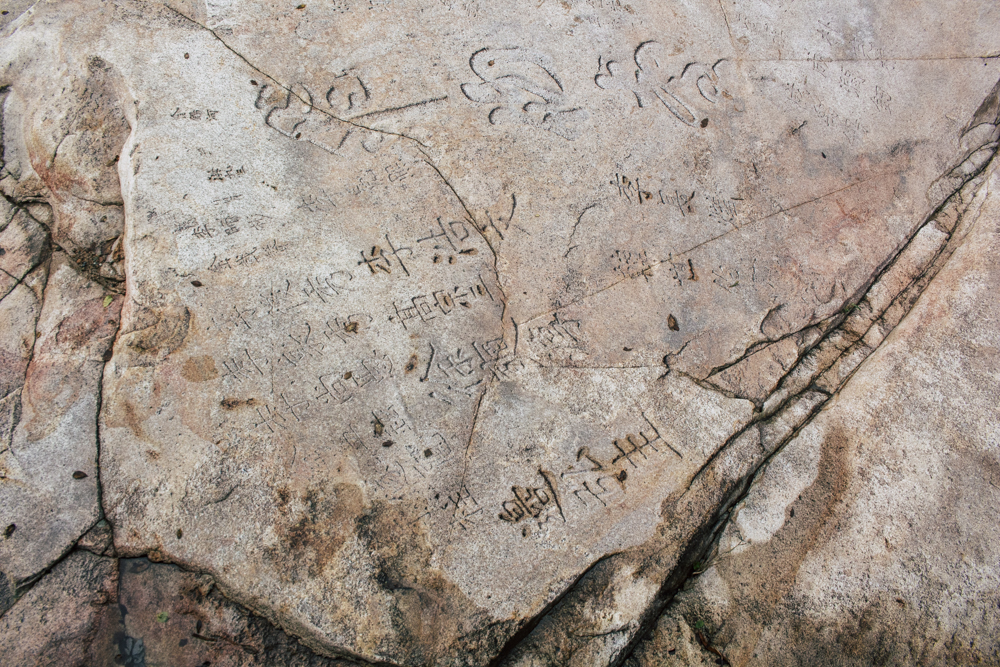
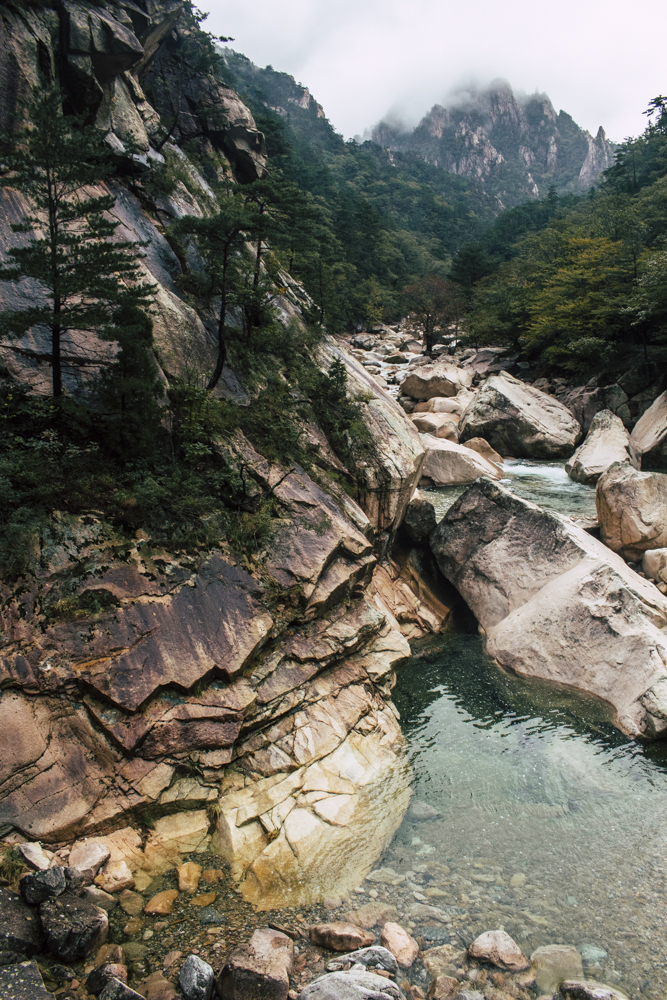
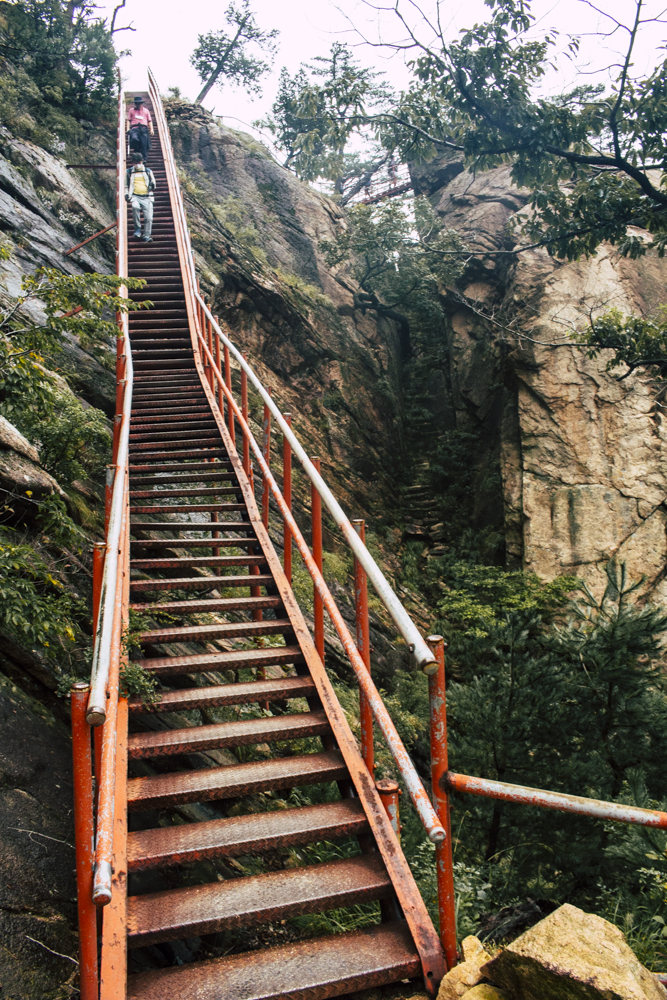
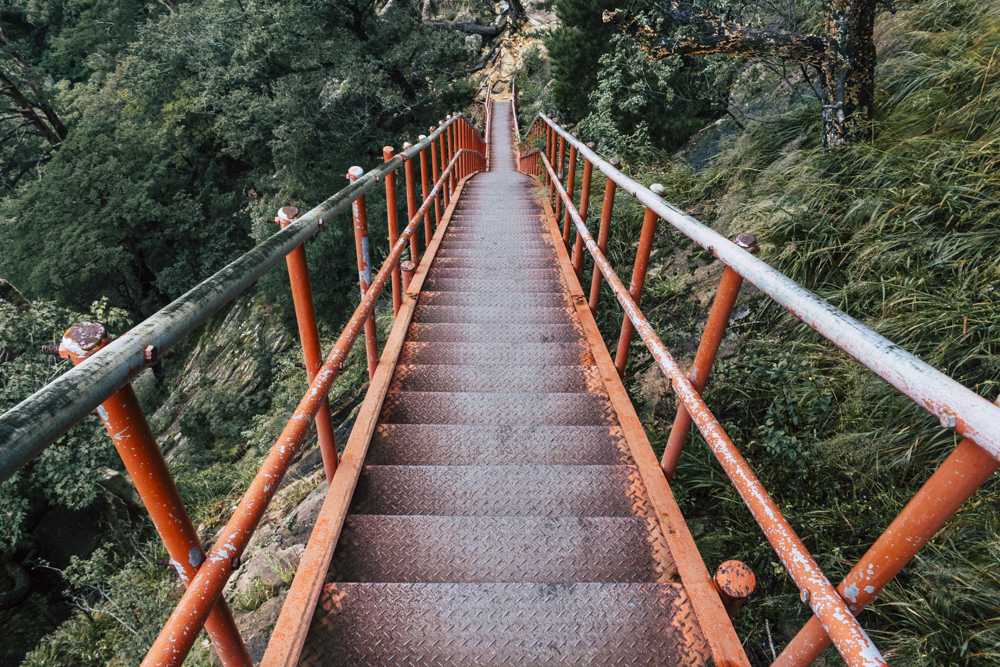
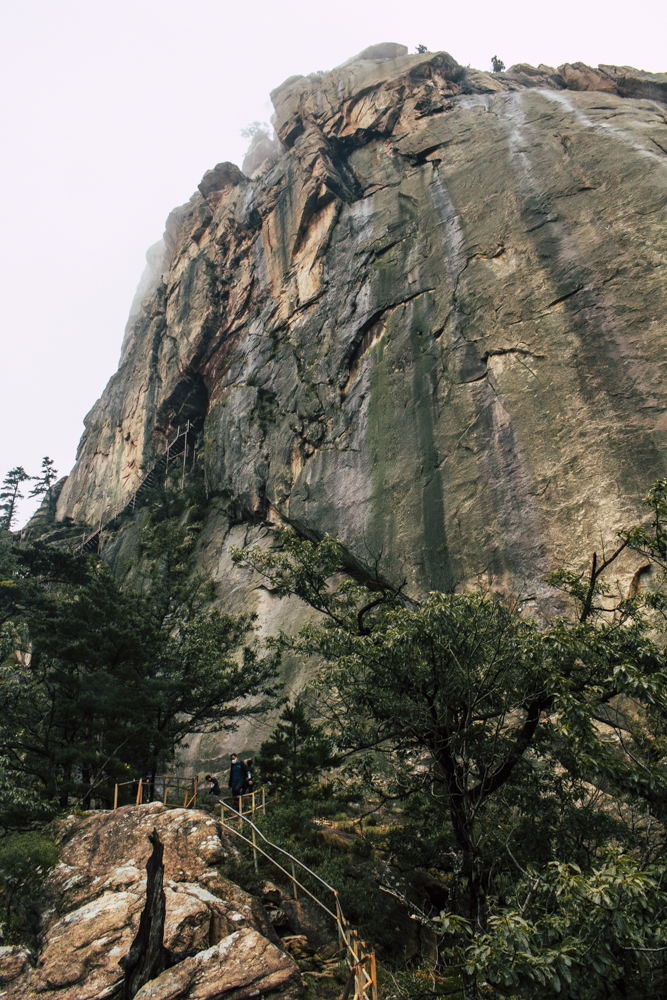
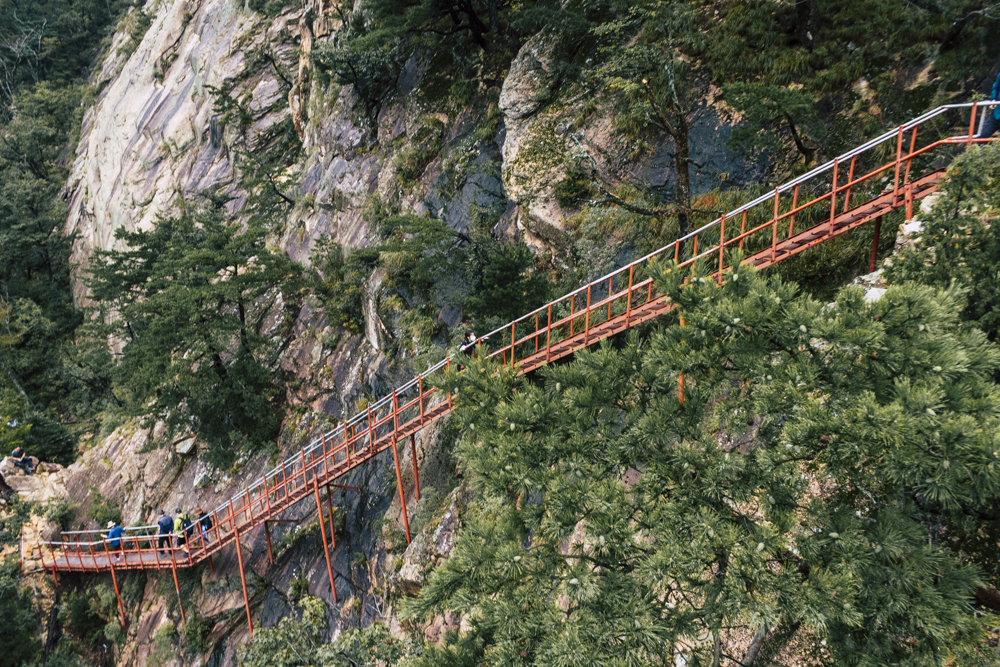
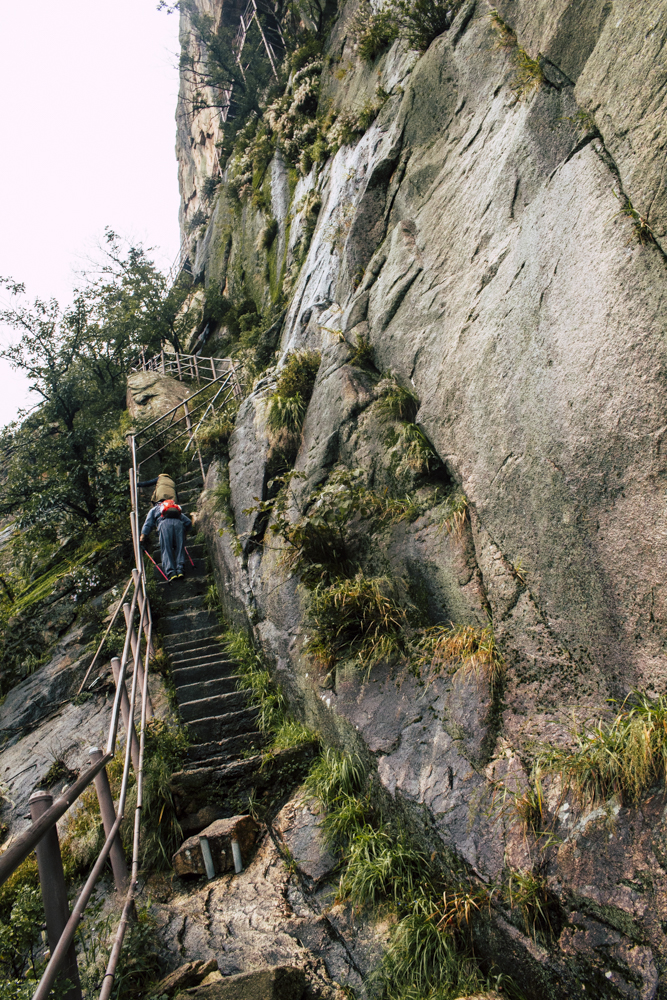
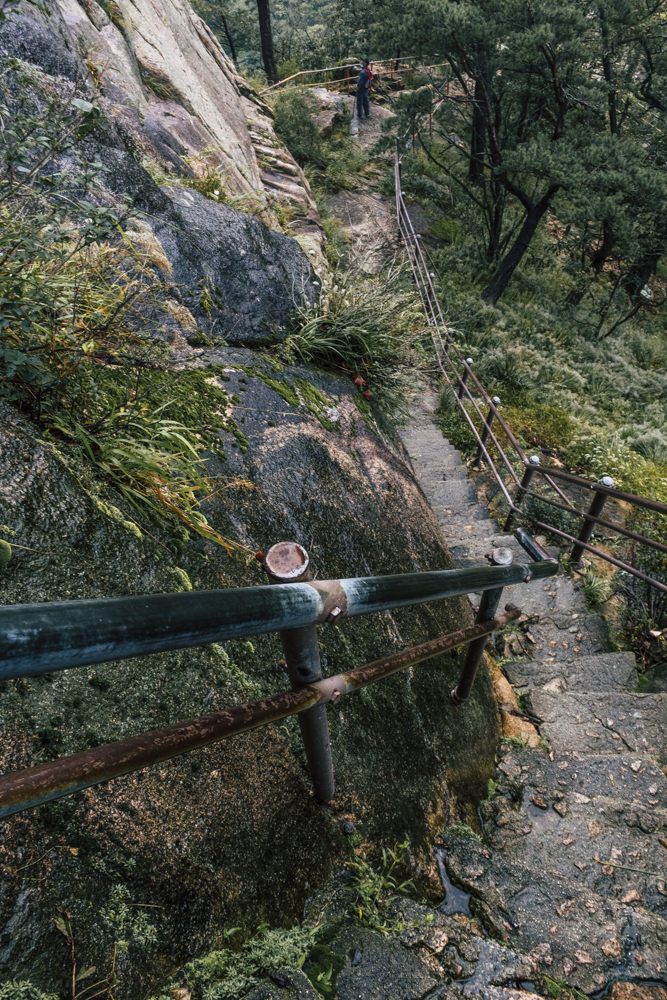
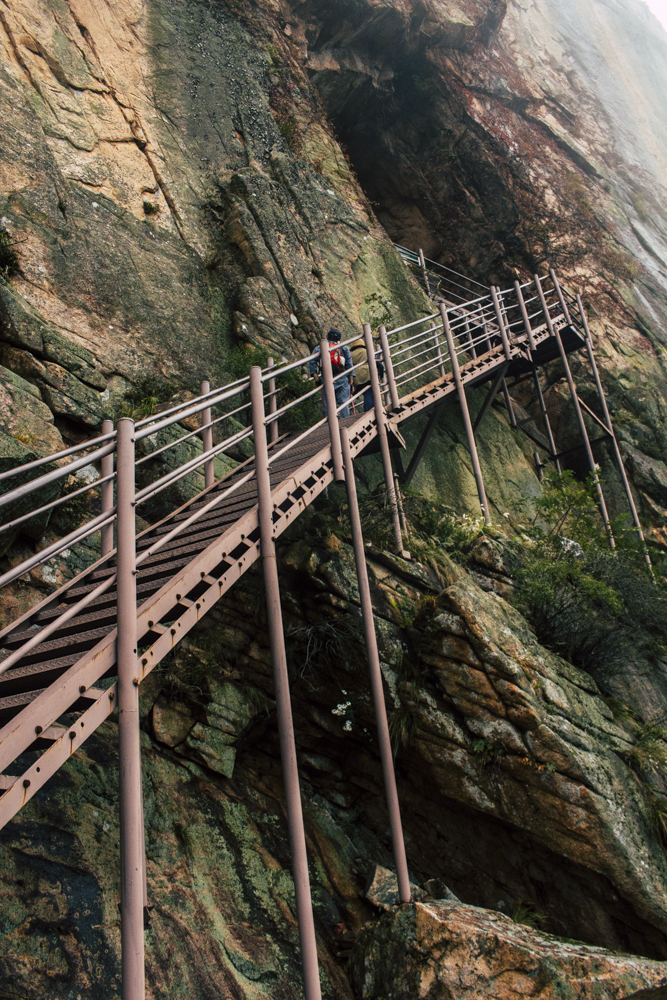
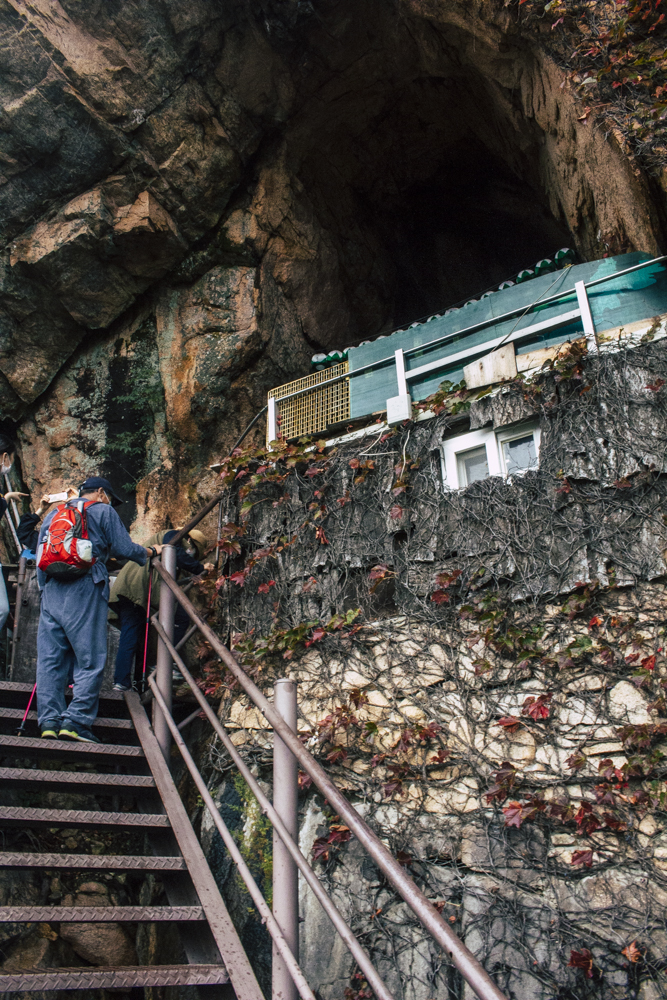
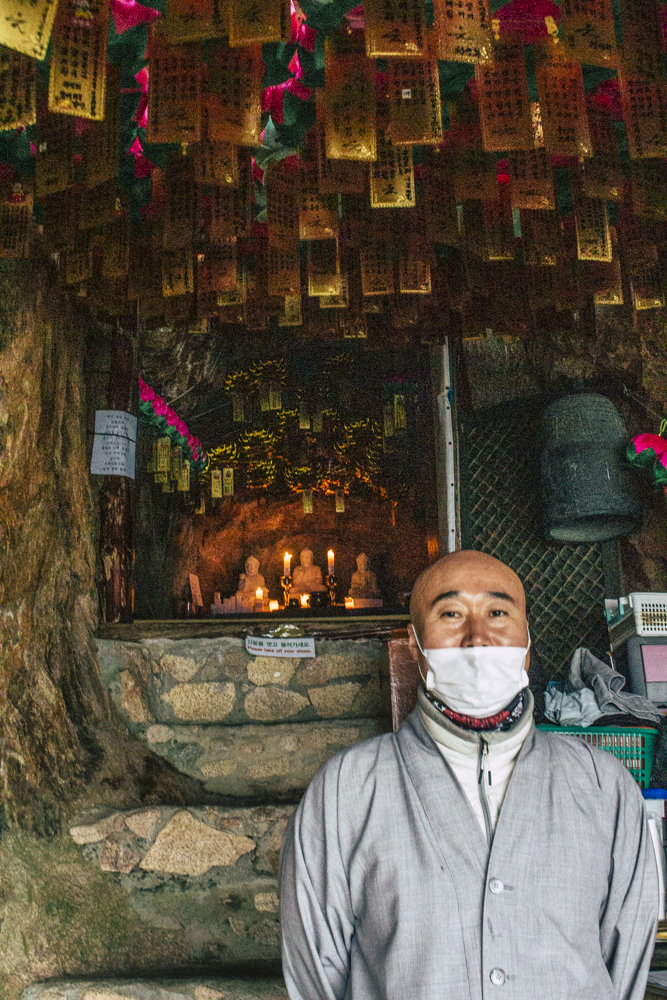
Day One was a three to four kilometer hike to Geumganggul Cave. Bisondae Rocks came first, a gathering of jagged rock towers that curve into a bubbling stream below. One rock, flat and inescapable, bears carved inscriptions in Chinese characters. I can’t translate but at least one source points to writers and poets of centuries past as the inscribers. Further along and atop a set of narrow orange stairs, I met a Korean couple from Bukhansan way. We exchanged coffee for cookies and took in the view, a steep climb to the cave above, a beautiful drop to the earth below. The monk supervising the cave was nearing the end of his “shift” by the time I’d arrived. He spoke some English and said he lived in Sinheungsa, the Seorak Buddhist temple I’d visit two days later. I commented that he must be healthy hiking to the cave every day. He said his upper body was, not so much the legs.






















 Colin Moore